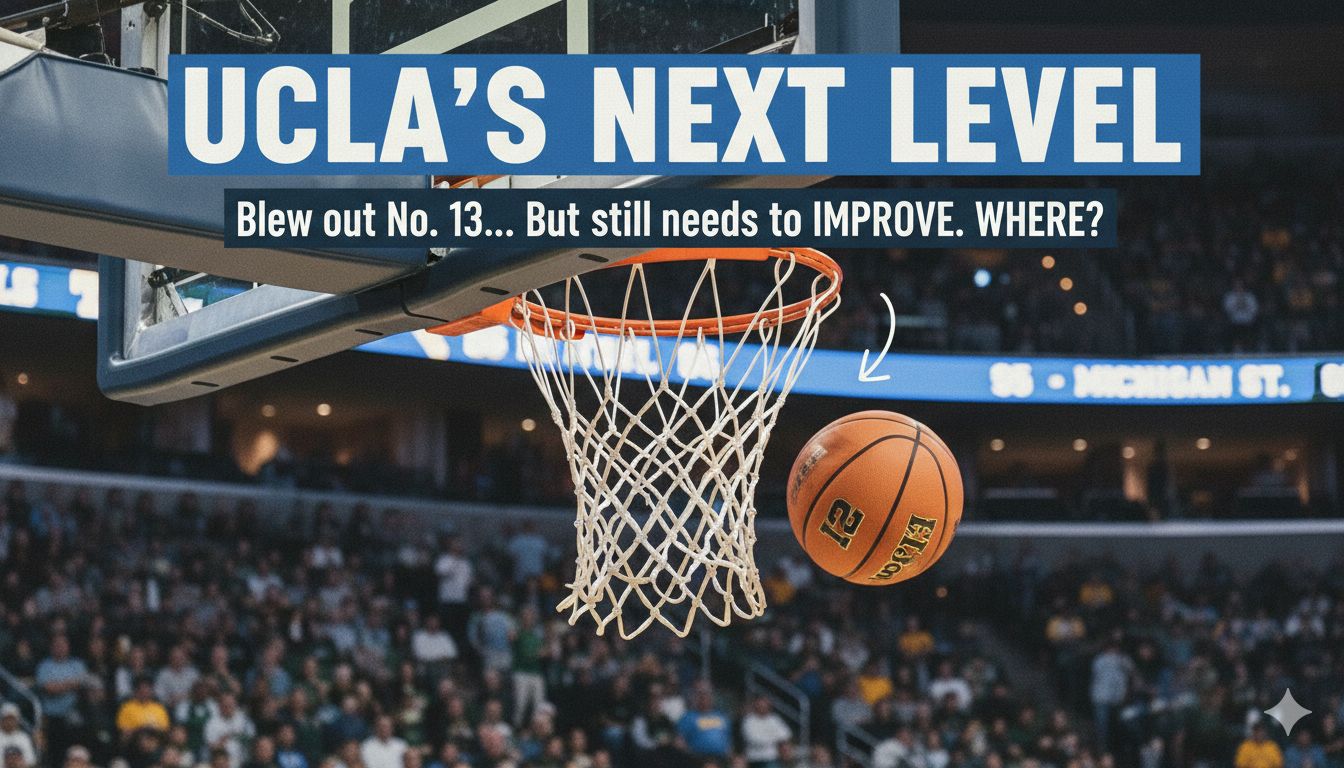
“No. 2 UCLA delivered a commanding 86-63 win over No. 13 Michigan State, extending their winning streak to 18 games with overwhelming advantages in the paint (56-22) and rebounding (48-28), led by Lauren Betts’ 22 points, seven rebounds, and five assists. While the Bruins’ interior dominance and balanced scoring were on full display, opportunities for improvement persist in perimeter defense, three-point shooting consistency, bench depth utilization, and sustaining intensity throughout all four quarters against lesser opponents.”
UCLA’s Interior Mastery Masks Perimeter Vulnerabilities
The Bruins asserted control early, building a significant lead by halftime and never looking back in East Lansing. Lauren Betts continued her stellar season, going efficiently from the field while facilitating for teammates, and Kiki Rice provided secondary scoring with 18 points and strong rebounding from the guard position. Gabriela Jaquez contributed 13 points primarily in the first half, and Gianna Kneepkens added 12 in a balanced attack.
UCLA’s size and physicality were the story of the night. They outscored Michigan State 56-22 in the paint, capitalizing on mismatches and second-chance opportunities. The rebounding margin of 48-28 highlighted their dominance on the glass, limiting the Spartans to one-shot possessions and fueling transition plays.
Despite the lopsided result, the Bruins’ perimeter defense showed moments of inconsistency. Michigan State managed to hit shots from beyond the arc in spurts, particularly in the later quarters when UCLA’s focus appeared to wane slightly after building a 31-point lead. The Spartans’ three-point attempts exposed occasional lapses in closeouts and rotations, allowing open looks that could prove costly against sharper-shooting teams in March. Improving perimeter closeouts and contesting without fouling will be crucial as the schedule intensifies.
Three-Point Shooting Remains an Inconsistent Weapon
UCLA’s offense thrives inside but relies less on volume from deep compared to some elite counterparts. In this matchup, the Bruins did not force a high volume of threes, focusing instead on paint touches and kick-outs when available. While effective against Michigan State’s interior defense, this approach could be challenged by zone-heavy schemes or teams that pack the paint in tournament play.
The team has capable shooters—Rice and Kneepkens have shown range—but consistency from beyond the arc has varied game to game. Boosting three-point percentage and attempting more in rhythm could add another dimension, preventing defenses from loading up on Betts and opening driving lanes further.
Bench Production and Late-Game Focus Need Sharpening
The starters carried much of the load, with limited minutes for reserves in a blowout. While this preserved energy, it also meant less real-game experience for the bench in high-pressure situations. Depth will matter in a grueling Big Ten slate and NCAA Tournament, where foul trouble or injuries can shift momentum quickly.
Additionally, the fourth quarter saw UCLA allow 25 points after holding opponents lower earlier. Maintaining defensive intensity and execution when leads balloon is a common challenge for top teams, but avoiding preventable breakdowns will help in close games down the stretch.
Key Statistical Breakdown from the Game
Points in the Paint : UCLA 56, Michigan State 22
Rebounds : UCLA 48, Michigan State 28 (offensive rebounds contributed to second-chance points)
Assists : UCLA distributed well, with Betts and Rice combining for 10
Turnovers : Bruins kept them low, forcing more from the Spartans
These numbers underscore UCLA’s strengths but also highlight where marginal gains could elevate them further.
Path Forward in the Big Ten Race
With a 14-0 conference record and only a handful of games left, UCLA holds a commanding position in the Big Ten standings. Their recent wins over top-15 opponents demonstrate championship-caliber play, but addressing perimeter vulnerabilities, boosting three-point reliability, and maximizing bench contributions will be key to sustaining dominance. As the postseason approaches, these refinements could separate a strong contender from a true national title threat.
Disclaimer: This is an opinion and analysis piece based on recent game observations and team performance trends. Basketball involves many variables, and outcomes can shift with execution, matchups, and adjustments.