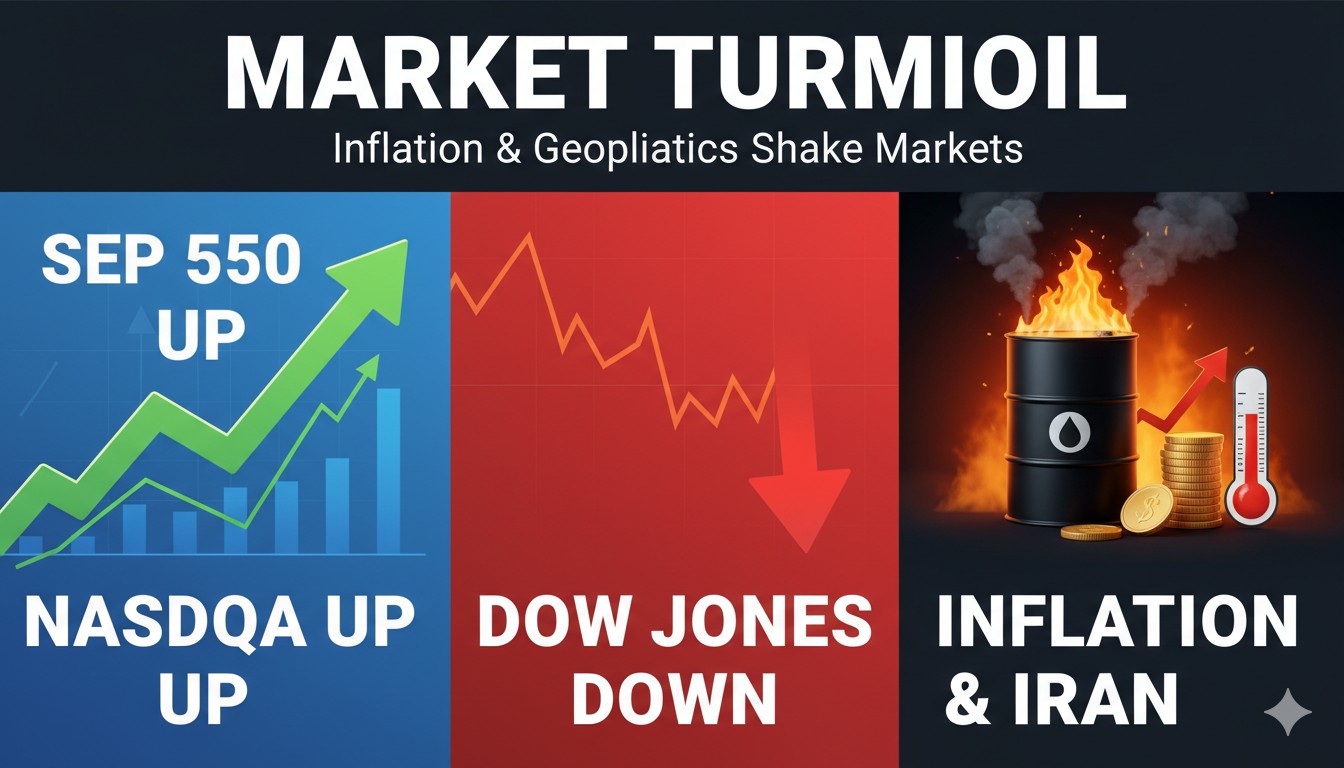
“In a session marked by cautious trading, the S&P 500 and Nasdaq Composite posted modest gains, supported by resilient tech sector momentum and inflation data that aligned with expectations, while the Dow Jones Industrial Average slipped as energy-related pressures and broader uncertainty from Middle East developments weighed on cyclical and industrial stocks.”
Stock Market Today: S&P 500 and Nasdaq Rise, Dow Slips Amid Fresh Inflation Data, Continued Iran Fallout
U.S. equities traded in a divided fashion as investors digested February’s Consumer Price Index (CPI) report while continuing to monitor the implications of the escalating situation involving Iran. The benchmark S&P 500 advanced modestly, buoyed by strength in technology and growth-oriented names that have shown relative resilience despite broader market volatility. The Nasdaq Composite followed a similar path higher, reflecting ongoing investor appetite for innovative sectors less directly exposed to energy price swings and traditional economic sensitivities.
In contrast, the Dow Jones Industrial Average ended lower, pressured by its heavier weighting toward industrials, financials, and other cyclical components that remain vulnerable to rising input costs and supply chain disruptions tied to global energy dynamics.
The February CPI data came in largely as anticipated, with the headline annual inflation rate holding steady at 2.4%, matching January’s level and representing the lowest reading since mid-2025. On a monthly basis, the index rose 0.3%, a slight pickup from the prior month’s 0.2% increase but still within forecasts. Core CPI, stripping out volatile food and energy components, remained unchanged at 2.5% year-over-year, with a monthly gain of 0.2%.
Key drivers in the report included a rebound in energy prices, where gasoline declines moderated significantly, and upward pressure from fuel oil and natural gas. Shelter costs continued to contribute meaningfully, though at a tempered pace, while food inflation stayed firm. These figures suggest underlying price pressures have not accelerated dramatically in the pre-conflict period, providing some reassurance to markets sensitive to Federal Reserve policy signals.
However, the data predates the full impact of recent oil price volatility triggered by developments in the Middle East. Crude benchmarks have experienced sharp swings, with West Texas Intermediate futures moving notably higher in recent sessions amid concerns over potential disruptions in key shipping routes like the Strait of Hormuz. Despite announcements regarding potential releases from international oil reserves, including a substantial drawdown plan, prices have remained elevated, injecting uncertainty into inflation outlooks and corporate margin forecasts.
The Iran situation has introduced persistent geopolitical risk, with reports of attacks on shipping, mining threats in strategic waterways, and ongoing military signaling contributing to intermittent spikes in volatility. Energy-sensitive sectors have seen amplified moves, while defensive areas and technology have offered relative stability. Investors have parsed statements from U.S. leadership hinting at possible de-escalation paths, but the lack of clear resolution has kept risk premiums elevated.
Sector performance reflected these crosscurrents. Technology and communication services led gains, benefiting from AI-driven narratives and less direct exposure to commodity inputs. Consumer discretionary showed mixed results, with some strength in growth names offset by caution in retail and cyclical spending areas. Energy stocks posted solid advances on the back of higher crude levels, providing a buffer for broader indexes, while industrials and materials lagged amid input cost worries.
Bond markets reacted mildly, with Treasury yields edging higher across parts of the curve as inflation steadied but geopolitical risks loomed. The dollar maintained firmness as a safe-haven play, though gains were contained.
Looking ahead, attention turns to upcoming Personal Consumption Expenditures (PCE) data, the Fed’s preferred inflation gauge, which could offer further clues on policy trajectory. Markets remain attuned to any fresh developments in the Middle East, where sustained disruptions could alter the inflation and growth narrative more forcefully.
Disclaimer: This is for informational purposes only and does not constitute investment advice, financial recommendations, or a solicitation to buy or sell securities. Market conditions can change rapidly, and past performance is not indicative of future results. Investors should conduct their own research or consult qualified professionals before making decisions.