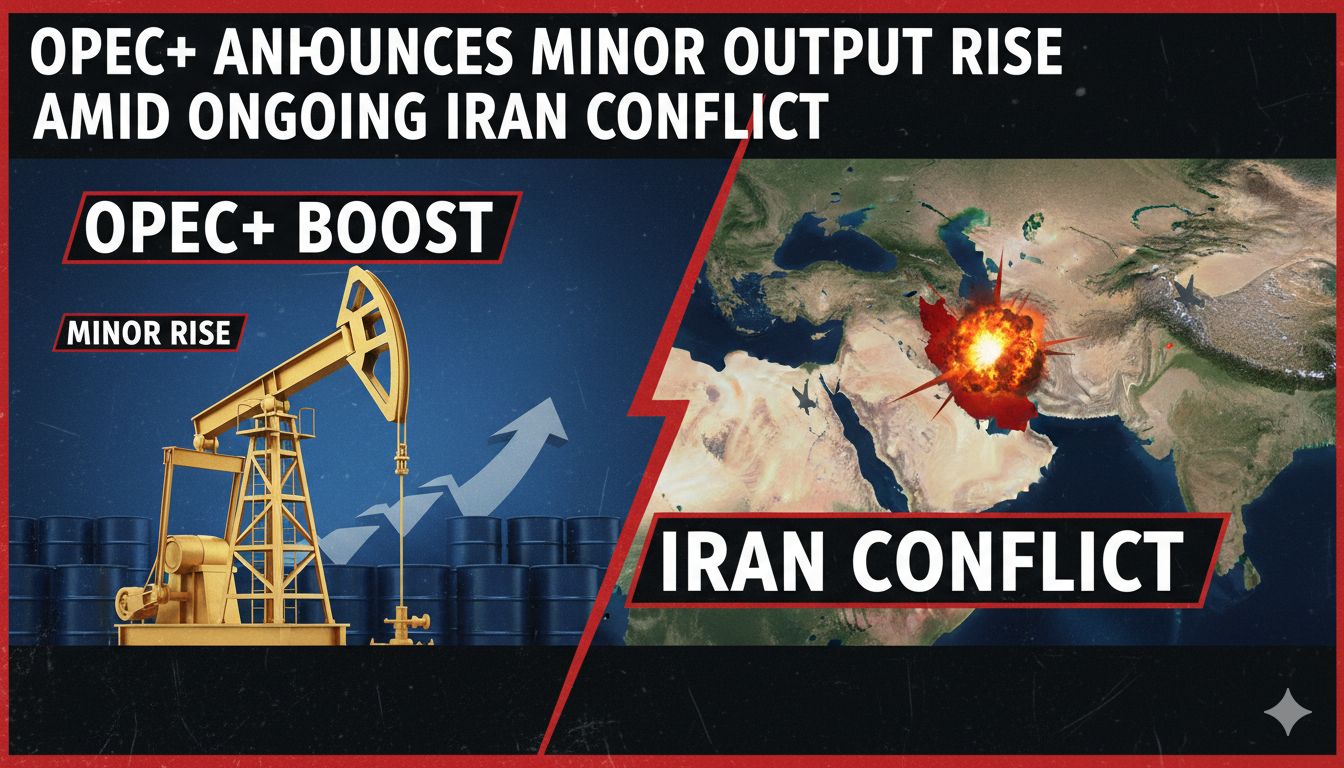
OPEC+ has approved a modest output hike of 206,000 barrels per day starting in April 2026, involving eight key members including Saudi Arabia and Russia. This decision ends a three-month pause in increases and comes against the backdrop of U.S.-Israeli strikes on Iran and subsequent retaliatory actions disrupting Middle East oil shipments, particularly through the Strait of Hormuz. The move aims to signal market stability despite geopolitical risks driving oil prices higher, with the increase representing a gradual unwind of prior voluntary cuts while falling short of more aggressive options debated.
OPEC+ Modest Output Adjustment Signals Confidence in Market Fundamentals
OPEC+ has moved forward with a carefully calibrated increase in oil production, approving an adjustment of 206,000 barrels per day (bpd) effective from April 2026. This decision, announced following a virtual meeting of eight participating countries—Saudi Arabia, Russia, Iraq, the United Arab Emirates, Kuwait, Kazakhstan, Algeria, and Oman—marks the resumption of output unwinding after a deliberate pause from January through March 2026 due to seasonal demand considerations.
The hike exceeds earlier market expectations of around 137,000 bpd, which aligned with the incremental steps seen in late 2025. Discussions within the group reportedly ranged from maintaining the baseline to considering larger boosts up to 411,000 bpd or even 548,000 bpd in response to emerging supply risks. Ultimately, the more restrained figure was selected, reflecting a balance between supporting market stability and avoiding overcommitment amid uncertain conditions.
This adjustment continues the phased return of 1.65 million bpd in voluntary cuts originally implemented in April 2023. The group had already recovered significant volumes—approximately 2.2 million bpd between April and September 2025—followed by gradual phasing out starting in October 2025. The latest move adds to prior increases, including substantial quota adjustments of about 2.9 million bpd from April through December 2025.
The timing coincides with heightened geopolitical tensions in the Middle East, where U.S. and Israeli military actions against Iran have triggered retaliatory strikes, severely disrupting regional oil flows. Shipping through the Strait of Hormuz, a vital chokepoint handling roughly one-fifth of global oil trade, has slowed dramatically or halted in sections, creating immediate supply bottlenecks for key producers. Gulf exports from nations like Saudi Arabia and the UAE face logistical hurdles until navigation resumes normally.
Despite these disruptions, the OPEC+ statement emphasized a steady global economic outlook and healthy market fundamentals, evidenced by persistently low oil inventories. The group reaffirmed its commitment to monitoring developments closely and adjusting as necessary to prevent excessive volatility.
Oil markets reacted swiftly to the combination of conflict-driven risks and the production announcement. Brent crude surged notably in over-the-counter trading, climbing toward $80 per barrel amid fears of prolonged supply constraints. Analysts have warned that sustained disruptions could push prices toward $90 or even $100 per barrel if the Strait of Hormuz remains impeded for an extended period. The modest nature of the OPEC+ increase—equivalent to less than 0.2% of global demand—has been viewed by some as largely symbolic, offering limited immediate offset to potential losses from the conflict zone.
Saudi Arabia and the UAE, holding the bulk of the group’s spare capacity, have reportedly ramped up exports in recent weeks in anticipation of such scenarios. However, even these major players could encounter export challenges if chokepoint issues persist. Other members like Russia, Iraq, and Kazakhstan contribute to the adjustment but face their own constraints in rapidly scaling output.
The decision underscores OPEC+’s strategy to reclaim market share gradually while responding to real-time events. By opting for a measured step rather than a dramatic surge, the alliance signals readiness to add barrels if needed without flooding the market prematurely. This approach contrasts with historical precedents where larger releases have sometimes pressured prices downward.
Broader implications for global energy security remain front and center. The conflict has already elevated risks across the region, affecting not only crude but also liquefied natural gas flows from Qatar and others. European energy markets have seen sharp movements in both oil and gas benchmarks as traders price in potential longer-term interruptions.
OPEC+ participants will continue monthly assessments, with the next steps likely influenced by the duration of current disruptions and evolving demand patterns. The group’s spare capacity, concentrated among a few members, limits the scope for aggressive counteractions, making careful calibration essential.
Key OPEC+ Production Adjustment Details
Participating Countries : Saudi Arabia, Russia, Iraq, UAE, Kuwait, Kazakhstan, Algeria, Oman
Output Increase : +206,000 bpd starting April 2026
Context : Resumes unwind of 1.65 million bpd voluntary cuts from 2023
Prior Actions : 2.9 million bpd quota rises April–December 2025; pause January–March 2026
Market Rationale : Stable economy, low inventories, healthy fundamentals
This measured response highlights the delicate balance OPEC+ maintains between supporting prices through discipline and addressing immediate supply threats without exacerbating oversupply concerns.
Disclaimer : This is a news report based on current market developments and does not constitute financial advice or investment recommendations.