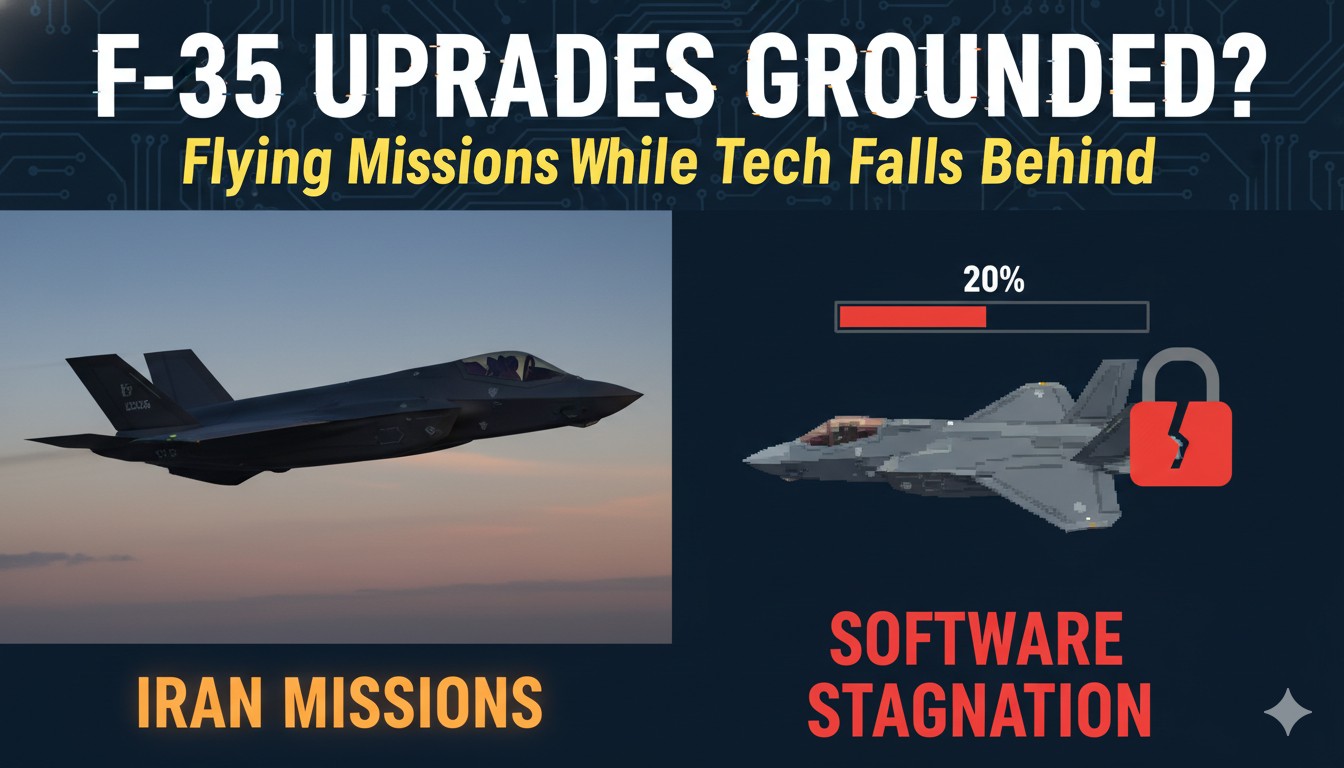
**” The F-35 program’s software development has stagnated, delivering zero new combat capabilities in the past year while jets equipped with earlier configurations undertake real-world missions over Iran, underscoring ongoing challenges in achieving reliable, fully functional upgrades amid escalating operational demands. “**
F-35 Software Upgrades Stagnate Amid Iran Operations
The Lockheed Martin F-35 Lightning II remains the cornerstone of U.S. airpower in the Middle East theater, where Marine Corps F-35Cs operating from carriers like the USS Abraham Lincoln have conducted suppression of enemy air defenses, intelligence gathering, and strike support in the conflict with Iran. These missions rely on the existing TR-2 software baseline, which has proven sufficient for penetrating defended airspace, coordinating with allied assets, and executing precision engagements without losses.
Yet the Pentagon’s latest annual report from the Director of Operational Test & Evaluation paints a stark picture of the upgrade path. The TR-3 configuration, designed to provide vastly increased processing power, improved displays, expanded data storage, and the foundation for the expansive Block 4 capability set, faced severe setbacks. Throughout much of last year, the software iteration under evaluation was described as predominantly unusable, plagued by instability that caused crashes or degraded performance, capability shortfalls that left key functions incomplete, and a continuous stream of newly identified deficiencies requiring fixes.
This stagnation means the program failed to meet even modest expectations for its agile development approach, which was intended to allow rapid iteration and deployment of enhancements. Instead, the process of resolving known issues while integrating new features has effectively stalled, with no measurable progress in delivering combat-usable advancements. The report emphasizes that software challenges persist across the board, hindering rigorous combat testing before fleet-wide installation.
In the current operational environment, F-35s flying Iran missions—whether U.S. Marine variants from carrier decks or allied Israeli F-35I Adir aircraft achieving deep strikes and even the type’s first air-to-air kill against an Iranian Yak-130—depend on legacy configurations. These jets have demonstrated remarkable effectiveness in suppressing Iranian air defenses, enabling follow-on bomber strikes, and maintaining air dominance in contested zones. Israeli operations, in particular, have highlighted the platform’s stealth and sensor fusion advantages, allowing penetration deep into Iranian territory to target nuclear-related sites, energy infrastructure, and command elements.
The irony is sharp: while the F-35 proves its worth in live combat, the upgrade pipeline that would keep it ahead of evolving threats like advanced Iranian air defenses or peer adversaries lags badly. TR-3 was originally targeted for full readiness years ago but encountered repeated delays from software integration hurdles, supply chain problems with new hardware components, and testing shortfalls. Deliveries of TR-3-equipped aircraft paused for nearly a year before resuming with a truncated software version that disabled some features to allow acceptance and training use.
Even with progress in clearing backlogs—Lockheed delivered a record number of jets last year after resolving much of the hold—the full combat-capable TR-3 remains elusive. Operational tests for the configuration are not expected to ramp up significantly until mid-to-late this fiscal year, delaying validation of its effectiveness. This postpones the broader Block 4 rollout, which promises integration of new weapons, enhanced electronic warfare tools, advanced sensors, and AI-driven mission systems to maintain relevance through the 2070s.
Key Challenges in F-35 Software Modernization
Persistent Software Instability : Frequent crashes and performance degradation in test environments prevented meaningful combat evaluations.
No New Capabilities Delivered : Zero additions to warfighting functions last year, despite agile methodology goals.
TR-3 Deficiencies : Hardware-software mismatches led to ongoing discoveries of issues, rendering versions unusable for full operations.
Impact on Fleet Readiness : Newer jets limited to training roles initially, while mission aircraft fly with older TR-2 software.
Broader Program Strain : Reduced procurement in recent budgets reflects concerns over availability rates hovering around 50% and upgrade timelines stretching into the next decade.
These issues occur against a backdrop where F-35s have already notched operational successes in the Iran theater, from suppressing defenses to enabling large-scale strikes. The platform’s current baseline has held up under real combat stress, but the absence of upgraded computing power limits future-proofing against countermeasures like improved jamming, drone swarms, or integrated air defense networks.
The Pentagon continues pushing for resolution, with Lockheed reporting incremental software releases to improve pilot interfaces, weapons integration, and electronic warfare features. Yet the report’s blunt assessment signals that without fundamental shifts in development processes, the F-35 risks falling behind the pace required for sustained superiority in high-end conflicts.
Disclaimer : This is a news report based on publicly available information and official assessments. It does not constitute investment, operational, or military advice.