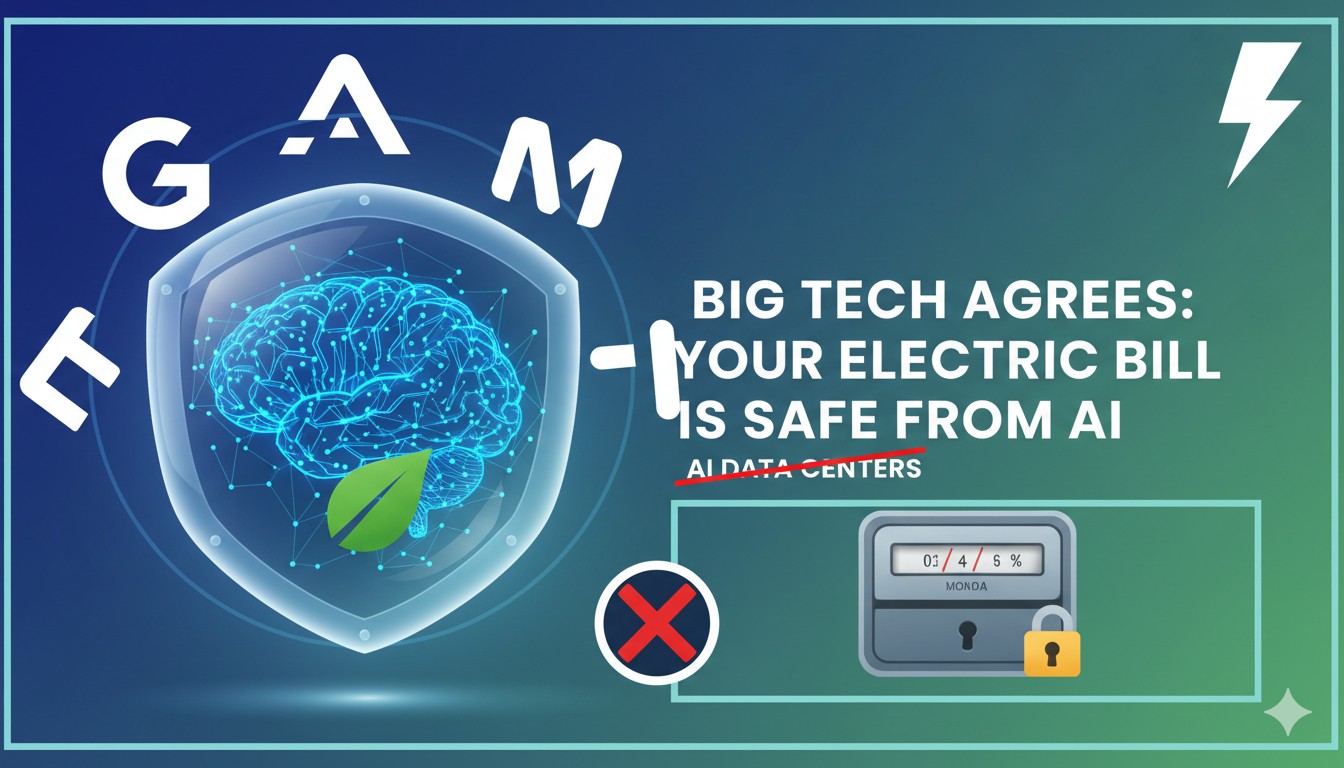
“In a significant development amid rising concerns over surging power demands from artificial intelligence infrastructure, major technology companies including Google, Microsoft, Meta, Amazon, Oracle, xAI, and OpenAI have committed to the ‘Ratepayer Protection Pledge.’ This voluntary agreement ensures that the massive energy needs of new AI data centers will be met through dedicated power generation and infrastructure investments borne entirely by the companies themselves, preventing any pass-through costs to household and small business electricity bills while potentially stabilizing or even reducing rates in affected communities.”
Ratepayer Protection Pledge Marks Turning Point in AI Energy Debate
The recent White House roundtable brought together executives from seven leading tech and AI firms to formalize commitments addressing one of the most pressing economic concerns tied to the explosive growth of artificial intelligence: the strain on the nation’s electric grid and its potential to inflate utility bills for everyday Americans.
AI data centers, which power everything from large language models to cloud computing services, are extraordinarily energy-intensive. A single large facility can consume electricity equivalent to that of a mid-sized city, with the sector’s overall demand projected to grow dramatically as companies race to deploy more advanced systems. This surge has already prompted localized rate pressures in high-concentration areas like Northern Virginia and parts of the Midwest, where utilities have sought approvals for grid expansions and higher tariffs to cover interconnection and transmission upgrades.
Under the pledge, participating companies have agreed to a multi-faceted approach designed to decouple their expansion from consumer rate impacts:
Dedicated Power Sourcing : Firms will build, bring online, or purchase new generation capacity specifically to meet the electricity requirements of their data centers. This includes investing in new power plants, renewable projects, or other sources where feasible, ensuring no additional burden falls on existing grid resources allocated to residential and commercial users.
Full Cost Coverage for Infrastructure : Companies commit to funding all necessary upgrades to transmission lines, substations, and related grid enhancements directly attributable to their facilities. This prevents utilities from recovering these capital expenditures through broad rate increases applied across customer classes.
Custom Rate Structures : Tech giants will negotiate specialized electricity tariffs with state-regulated utilities. These structures often involve paying fixed or higher rates for reserved capacity, even during periods of lower utilization, guaranteeing revenue stability for utilities without relying on general ratepayer subsidies.
Community and Workforce Investments : Beyond energy specifics, signatories pledge to prioritize local hiring for construction and operations, contributing to economic benefits in host regions and supporting workforce development programs.
Grid Support Features : In some cases, companies will configure their infrastructure to provide backup power or ancillary services to local grids during emergencies or peak demand, enhancing overall system reliability.
This initiative responds directly to bipartisan concerns raised in Congress and state legislatures. Lawmakers from both parties have introduced measures ranging from temporary moratoriums on new data center construction to requirements that facilities self-supply power or face penalties. The pledge positions the industry as proactive partners in addressing these issues, aligning with broader goals of maintaining U.S. leadership in AI while protecting affordability.
Industry leaders emphasize that these commitments build on existing sustainability efforts. Many firms have long pursued carbon-free energy matching, on-site renewables, and efficiency improvements. The new agreement extends this to explicit ratepayer protections, with binding contracts in some instances to enforce compliance.
The economic context is stark. National average electricity prices have climbed noticeably in recent years, with some regions experiencing sharper increases due to data center clustering. Utilities have filed for billions in rate adjustments to accommodate interconnection queues dominated by large commercial loads. By shouldering these costs privately, the tech sector aims to mitigate what could otherwise become a widespread affordability challenge.
Potential benefits extend beyond cost containment. New dedicated generation could introduce additional capacity to regional grids, potentially lowering wholesale prices and providing downward pressure on retail rates over time. Communities hosting these projects stand to gain from job creation, tax revenues, and infrastructure improvements without the offsetting risk of higher monthly bills.
While the pledge is voluntary and relies on good-faith implementation, along with state-level negotiations, it represents a coordinated effort to balance innovation with consumer protection. As AI continues to transform industries, this framework could set a precedent for how high-growth sectors manage their resource demands responsibly.
Disclaimer : This is a news report based on current developments in the energy and technology sectors. It does not constitute financial, investment, or legal advice.