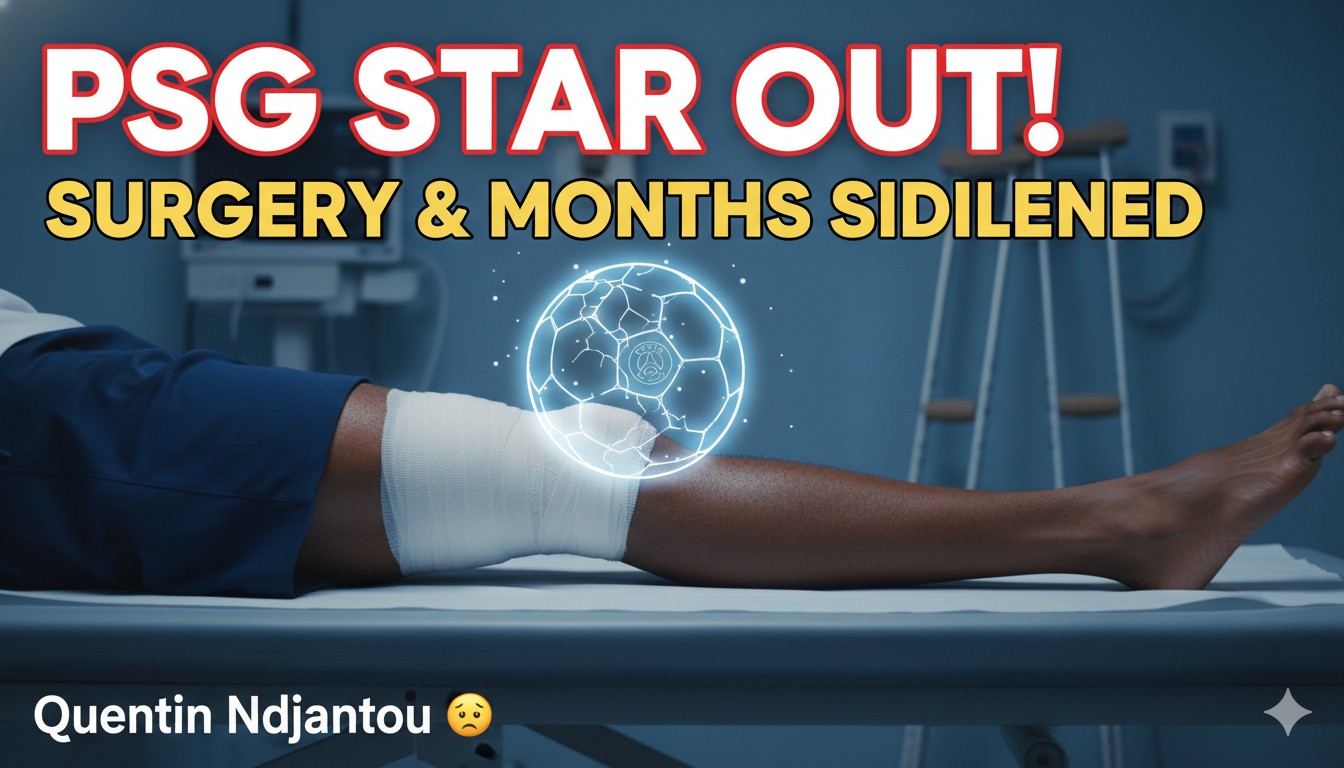
“Paris Saint-Germain faces a setback as young forward Quentin Ndjantou requires hamstring surgery, potentially missing several months of action, impacting the club’s youth development strategy and on-field dynamics amid a dominant Ligue 1 campaign.”
Financial Implications of Ndjantou’s Extended Absence
The decision to proceed with surgery on Quentin Ndjantou’s right hamstring tear represents a significant challenge for Paris Saint-Germain, not just in terms of squad depth but also through the lens of financial management and long-term asset valuation. As a product of PSG’s youth academy, Ndjantou embodies the club’s investment in homegrown talent, which has become increasingly vital under financial fair play regulations. His absence could strain the team’s attacking options, potentially affecting match outcomes and associated revenues from broadcasting deals and merchandise sales.
Ndjantou, valued at around €7 million in the transfer market, has seen his stock rise this season with limited but promising appearances. The injury interrupts this momentum, possibly depreciating his market value if recovery extends beyond initial projections. Clubs like PSG rely on player valuations for balance sheet strength; a prolonged layoff might necessitate additional spending on temporary replacements or accelerate negotiations for new signings, dipping into transfer budgets that are already under scrutiny from UEFA’s financial oversight.
From a broader economic perspective, PSG’s model hinges on consistent performance to maximize revenue streams. The club’s record-breaking €837 million in revenues for the previous fiscal year underscores the importance of on-pitch success. Commercial partnerships, which generated €367 million, often include performance-based clauses tied to league standings and Champions League progression. With Ndjantou out, the burden shifts to established stars, but any dip in form could erode these income sources.
Key Points on PSG’s Youth Investment Strategy
PSG’s academy has produced several talents in recent years, helping comply with squad cost ratios and reducing reliance on high-cost transfers.
Ndjantou’s development represents a low-initial-cost asset; his professional contract, signed recently, ties into the club’s strategy of nurturing players for first-team integration or profitable sales.
Injuries to young players like this can increase insurance premiums, as clubs often carry policies covering wage continuations and medical expenses, estimated in the millions for top-tier teams.
The financial return on academy investments is evident: sales of homegrown players have historically offset operational costs, with PSG netting substantial fees from similar prospects.
Impact on Team Performance and Revenue Projections
PSG currently leads Ligue 1 with a commanding position, but the injury adds to existing squad management challenges. The forward line, already rotating due to international commitments and minor ailments among key players, may require tactical adjustments that could affect goal-scoring efficiency. Financially, this translates to potential losses in matchday revenues if fan engagement wanes from inconsistent results, though the Parc des Princes continues to sell out, contributing €175 million annually.
Broadcasting rights, a cornerstone of PSG’s €837 million turnover, are amplified by strong domestic and European performances. A several-month absence for Ndjantou might force reliance on less experienced backups, risking points dropped in crucial fixtures. Analysts project that even a minor slip in league position could cost the club up to €10-15 million in prize money and sponsorship bonuses.
Moreover, the injury highlights broader issues in player workload management. PSG’s participation in multiple competitions increases injury risks, which in turn elevates medical and rehabilitation costs. The club’s economic impact on the region, supporting over 2,300 jobs and generating €243 million in activity, depends on maintaining a high-profile, winning image that attracts global investment.
Ligue 1 Standings and PSG’s Dominance
To contextualize the potential disruption, here’s a snapshot of the current Ligue 1 table, where PSG’s lead provides a buffer but underscores the need for depth:
| Position | Team | Played | Wins | Draws | Losses | Goals For | Goals Against | Goal Difference | Points |
|---|---|---|---|---|---|---|---|---|---|
| 1 | Paris Saint-Germain | 20 | 15 | 3 | 2 | 43 | 16 | +27 | 48 |
| 2 | Lens | 20 | 15 | 1 | 4 | 34 | 16 | +18 | 46 |
| 3 | Marseille | 20 | 12 | 3 | 5 | 46 | 22 | +24 | 39 |
| 4 | Lyon | 20 | 12 | 3 | 5 | 33 | 20 | +13 | 39 |
| 5 | Lille | 21 | 10 | 3 | 8 | 34 | 30 | +4 | 33 |
This table illustrates PSG’s edge, but with tight competition at the top, any injury-induced vulnerabilities could narrow the gap, affecting end-of-season financial payouts.
Player Valuation and Market Dynamics
Ndjantou’s career trajectory, marked by 15 appearances this season including one goal and two assists across all competitions, positions him as a high-potential asset. His market value of €7 million reflects early promise, but surgeries like this can lead to valuation dips of 20-30% if complications arise. For PSG, which has multiplied its turnover ninefold since 2011, protecting such investments is crucial. The club may look to insurance recoveries to offset wage costs during his absence, typically covering 80-90% of salaries for injured players.
In the transfer market, this injury could delay any future sales, impacting cash flow planning. PSG’s strategy often involves monetizing academy graduates to fund star acquisitions, and disruptions like this necessitate contingency budgeting.
Broader Financial Risks in Sports Injuries
Injuries across elite football carry systemic financial risks. For PSG, owned by Qatar Sports Investments, the focus is on sustainability amid global economic pressures. Rising medical costs, estimated at 5-7% of operational budgets for top clubs, add to the strain. Additionally, fan merchandise tied to emerging stars like Ndjantou contributes to the €367 million commercial revenue; a sidelined player means missed marketing opportunities.
The decision for surgery, following monitoring of the initial tear, suggests a conservative approach to long-term health, which financially pays off by preserving asset value over rushed returns. However, the “several months” timeline could overlap with key Champions League stages, where progression bonuses can reach €50 million or more.
Strategic Adjustments and Cost Mitigations
To mitigate the financial hit, PSG might accelerate youth promotions or dip into reserves for short-term loans. The academy’s success in producing cost-effective talent helps buffer such setbacks, aligning with financial fair play by keeping squad costs under control. Insurance plays a pivotal role here, with policies often including clauses for performance-related losses, though claims can be complex.
Overall, while Ndjantou’s absence is a blow, PSG’s robust financial foundation—bolstered by diverse revenue streams—positions the club to weather this storm, emphasizing the importance of diversified squad investments in modern football economics.
Disclaimer: This news, report, and tips are provided for informational purposes only and should not be considered as financial advice or investment recommendations.