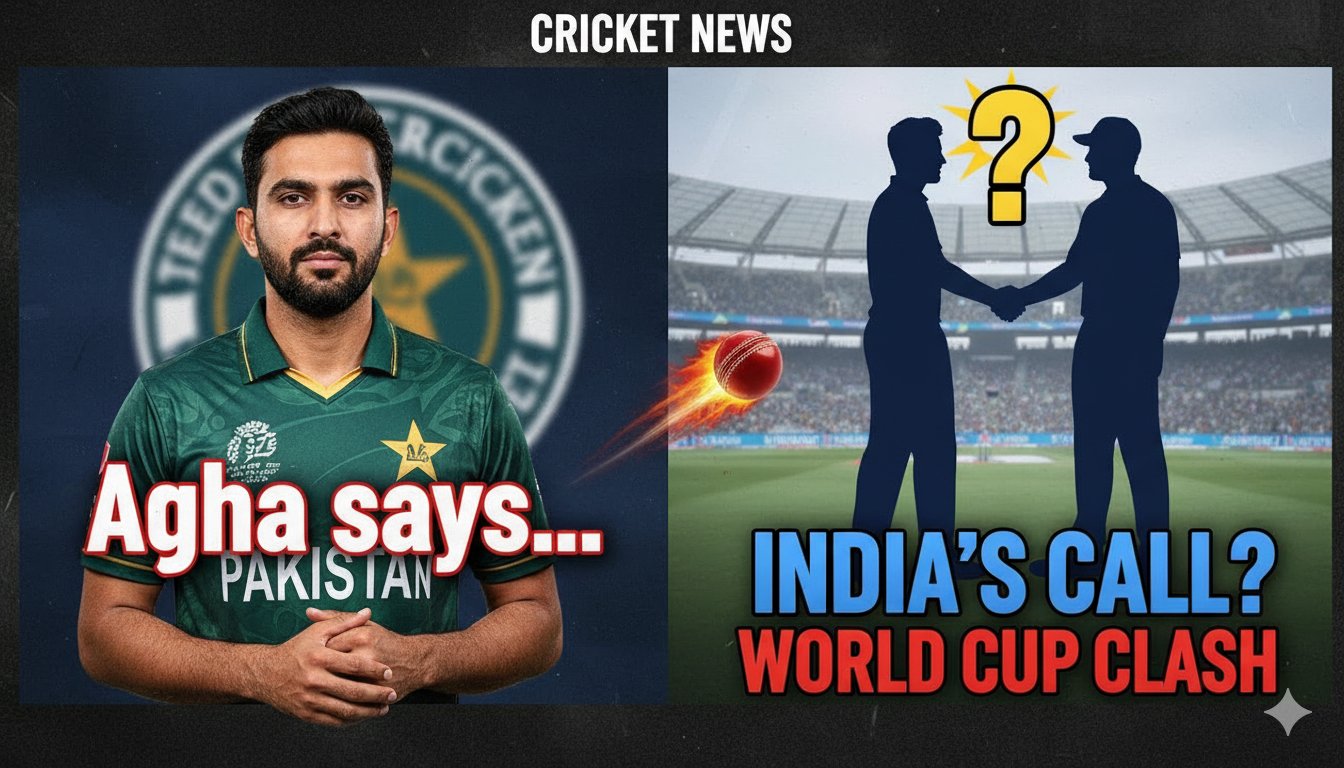
“The game should be played in the real spirit of cricket, the way it has been since it started. The rest is up to them (India), whatever they want to do,” Pakistan captain Salman Ali Agha told reporters, emphasizing sportsmanship while deferring the pre- and post-match handshake protocol to the Indian team for Sunday’s marquee T20 World Cup encounter.
Handshakes in Focus as India-Pakistan Rivalry Returns to Global Stage
The cricketing world is buzzing ahead of the blockbuster Group A matchup between India and Pakistan in the ICC Men’s T20 World Cup 2026, set for Sunday at the R. Premadasa Stadium in Colombo, Sri Lanka. Pakistan’s stand-in or appointed captain Salman Ali Agha addressed the lingering controversy surrounding player handshakes, a protocol that has become a flashpoint in recent bilateral contests between the two arch-rivals.
Speaking at the pre-match press conference on Saturday, Agha made it clear that his side is prepared to uphold traditional courtesies but placed the onus squarely on India’s players to initiate or reciprocate any pre-game or post-game handshakes. “It’s up to them to decide what to do,” he stated, while stressing that the contest should remain firmly rooted in the spirit of the game. This measured response comes after a similar issue overshadowed the 2025 Asia Cup, where India opted against handshakes amid heightened geopolitical tensions following regional events, including security concerns and subsequent diplomatic ripples.
The handshake debate traces back to that tournament, where India’s decision not to engage in the customary gesture at the toss or during presentations drew criticism from some quarters for sidelining the essence of sportsmanship. Pakistan’s players, including Agha, notably skipped certain ceremonial aspects in response, highlighting how off-field matters can overshadow on-field action in this intense rivalry. Agha avoided committing definitively to Pakistan’s stance if India extends a hand, offering a cryptic yet optimistic “We will find out tomorrow” when pressed on reciprocity. His comments suggest openness to reconciliation on the field while prioritizing performance over protocol.
India’s captain Suryakumar Yadav echoed a similar reluctance to commit early, telling media, “Wait for 24 hours,” and emphasizing that the focus remains on delivering quality cricket rather than ceremonial debates. Both skippers appeared keen to deflect prolonged discussion on the issue, redirecting attention to the match itself—a fixture that consistently draws massive global viewership and carries immense emotional weight for fans across borders.
Historically, India and Pakistan clashes in ICC events have been defined by high drama, with India holding a strong record in recent World Cups and multi-nation tournaments. Pakistan, however, boasts memorable upsets and a passionate fanbase that thrives on these encounters. The Colombo venue adds another layer, as neutral grounds have often hosted these games due to bilateral series suspensions since 2012-13. The T20 format amplifies the stakes, with explosive batting lineups, dynamic all-rounders like Agha himself, and world-class bowling attacks on both sides promising an electric contest.
Agha’s leadership role brings fresh dynamics to Pakistan’s setup. Known for his calm demeanor, versatile middle-order batting, and useful off-spin, he has stepped into the spotlight amid squad transitions and form considerations. His pre-match remarks reflect a captain trying to foster unity and focus within his team while navigating external noise. By framing the handshake as India’s call, Agha subtly shifts pressure away from his group, allowing them to concentrate on execution rather than speculation.
The broader context includes the evolving landscape of ICC events, where political undercurrents occasionally influence player interactions. Yet, both captains’ emphasis on the “spirit of cricket”—a principle enshrined in the game’s code of conduct—signals a desire to let talent and competition take precedence. Fans worldwide will watch not just for boundaries and wickets but also for any moment at the toss or final huddle that could symbolize goodwill amid rivalry.
As the match approaches, anticipation builds around team selections, pitch conditions in Colombo favoring spin and pace alike, and how both sides manage pressure in a high-octane T20 environment. Whether handshakes occur or not, the encounter promises to deliver the intensity that has defined India-Pakistan cricket for decades.
Disclaimer: This is a news report based on public statements and cricketing developments. It does not constitute official commentary or endorsement from any governing body.