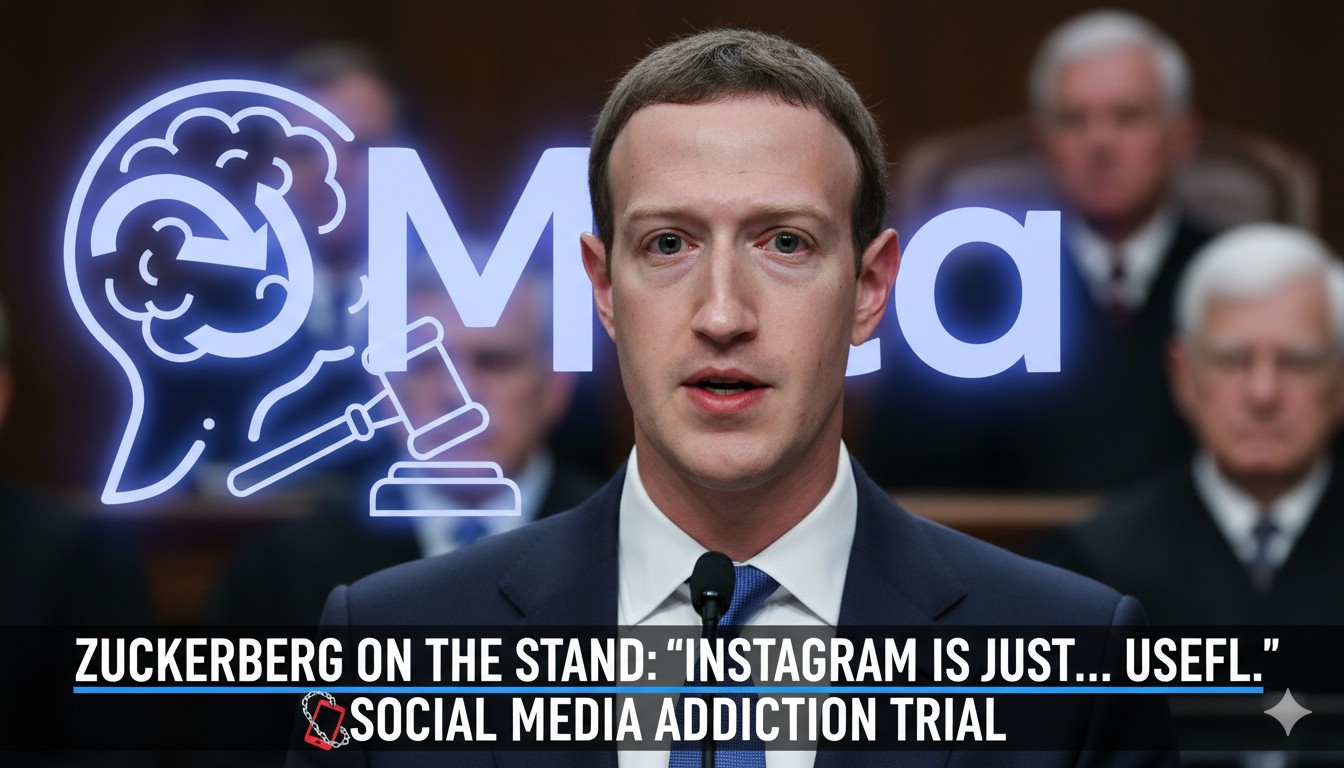
“In a high-stakes Los Angeles courtroom, Meta CEO Mark Zuckerberg testified under intense questioning, pushing back against claims that Instagram was engineered to addict young users. He emphasized that the company’s focus has shifted toward creating valuable, utility-driven experiences rather than maximizing time spent, arguing that meaningful connections and safety drive long-term engagement.”
Zuckerberg Takes the Stand in Bellwether Case
Mark Zuckerberg appeared in Los Angeles Superior Court on February 18, 2026, marking his first time testifying before a jury in a case centered on allegations that social media platforms like Instagram deliberately foster addictive behaviors in children and teens, contributing to mental health issues.
The trial, involving a now-20-year-old plaintiff identified as K.G.M. (often referred to as Kaley), accuses Meta and other companies of designing features that hooked her starting at a young age—YouTube from age 6 and Instagram from age 9—leading to excessive use, sometimes exceeding 16 hours daily, and resulting in anxiety, depression, and body dysmorphia. While Snap and TikTok settled earlier, Meta and Google (for YouTube) face this bellwether proceeding, which could influence hundreds of similar lawsuits from families, school districts, and state attorneys general.
During nearly eight hours of grilling by plaintiff attorney Mark Lanier, Zuckerberg repeatedly defended Meta’s intentions and practices. Confronted with internal documents from over a decade ago, including emails and goals mentioning increased engagement and time spent as priorities, Zuckerberg maintained that such metrics were part of broader product improvement efforts, not addiction-driven strategies.
He highlighted a shift in company philosophy: Meta made a deliberate decision to move away from time-based goals toward emphasizing utility and value. “If something is valuable, people will use it more because it’s useful to them,” Zuckerberg stated, framing higher usage as a natural outcome of providing helpful services for connecting with family, friends, and learning about the world.
When pressed on whether addictive behaviors also lead to increased use, Zuckerberg responded cautiously: “I think that may be true but I don’t know if that applies here.” He stressed that building sustainable communities requires ensuring users feel safe and have positive experiences—if not, people would leave for alternatives.
Underage Access and Safety Measures
A significant portion of the examination focused on underage users. Lanier presented evidence suggesting Instagram had millions of users under 13 in past years, including internal estimates from 2015 indicating around 4 million such accounts in the U.S., representing a substantial portion of 10- to 12-year-olds.
Zuckerberg acknowledged challenges in age verification but insisted children under 13 have never been officially allowed on Instagram. He expressed regret over the pace of improvements: “I always wish that we could have gotten there sooner,” referring to enhanced detection and enforcement tools for underage accounts.
He detailed ongoing efforts to protect young users, including adjustments to reduce underage prevalence, limits on certain features, and decisions not to recommend potentially harmful elements like specific beauty filters to broader audiences, even if users could opt in.
Zuckerberg countered claims of targeting “tweens” and “teens” aggressively for engagement. When shown older documents discussing converting younger users into loyal teens or maximizing “total teen time spent,” he often deferred to the documents’ content without endorsing intent, saying phrases like “that’s what the document says” or noting faded memory of decade-old emails.
Engagement vs. Addiction Debate
The core contention revolved around design choices. Plaintiff lawyers argued features like infinite scrolling, notifications, and algorithmic recommendations were built to hook users, especially vulnerable youth, for profit through prolonged exposure and ad revenue.
Zuckerberg rejected the notion of intentional addiction. He described Meta’s approach as prioritizing long-term sustainability over short-term hooks: “If people feel like they’re not having a good experience, why would they keep using the product?” He tied well-being directly to community health—unsafe or negative environments are unsustainable.
He referenced past internal goal-setting, including a 2015 email listing time spent as a top item, but noted the company evolved its metrics. Current focus, he said, centers on utility: creating tools that genuinely help people connect and share meaningfully.
In response to questions about congressional testimony (such as in 2024), where he denied directives to maximize time spent, Zuckerberg stood by those statements while acknowledging evolving company practices.
Plaintiff’s Evidence and Courtroom Moments
Lanier used dramatic visuals, including a massive display of hundreds of the plaintiff’s Instagram posts to illustrate extensive time invested on the platform. Zuckerberg viewed the exhibit but disputed characterizations, responding to a suggestion that Meta “owns” those pictures with: “I’m not sure that’s accurate.”
The testimony grew combative at times, with Zuckerberg offering measured, repetitive answers—often hedging with “it sounds like something I would have said” or probabilistic phrasing—to avoid concessions.
Broader Implications
This case scrutinizes whether platforms like Instagram bear responsibility for mental health harms linked to compulsive use among minors. Zuckerberg maintained that scientific evidence does not conclusively prove causation from social media to such outcomes, while affirming Meta’s commitment to reasonable safety measures.
He portrayed Meta’s evolution as responsive to feedback and data, balancing innovation with protection—particularly for teens—while denying designs aimed at exploitation.
The jury’s decision in this trial could set precedents for ongoing multidistrict litigation, influencing how tech companies address youth safety amid mounting scrutiny.
Disclaimer: This article is for informational purposes only and does not constitute legal, financial, or investment advice. It reflects reported events and statements as of the latest available information.