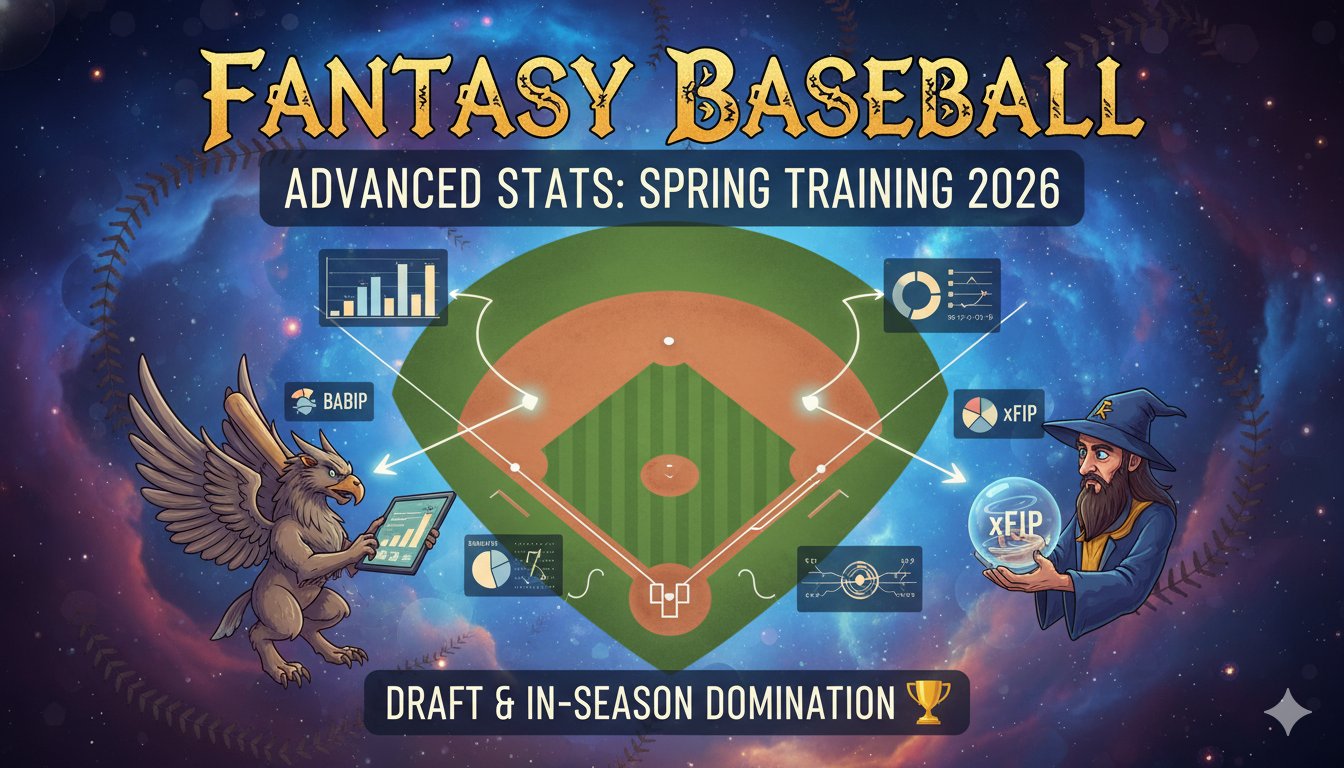
“In the early days of 2026 Spring Training, with full Statcast coverage across all parks for the first time, fantasy managers gain unprecedented access to advanced metrics like bat speed, exit velocity, Stuff+, velocity trends, pitch movement, barrel rates, and plate discipline indicators. These tools reveal potential breakouts, velocity bumps, mechanical tweaks, and regression risks far better than traditional box score lines, helping refine draft boards and spot in-season edges amid small samples.”
Detailed Analysis: Advanced Metrics That Drive 2026 Fantasy Success
Spring Training has evolved into a critical scouting window for fantasy baseball in 2026. Traditional stats like batting average or ERA often mislead due to small samples, varying player effort, and Grapefruit/Cactus League quirks. Instead, focus on underlying process metrics now available league-wide via Statcast. These provide reliable signals on sustainable performance, especially for hitters showing power gains or pitchers regaining velocity post-injury.
For hitters, prioritize bat tracking and quality-of-contact data. Bat speed has become a cornerstone metric, with league averages hovering around 71-72 mph based on recent seasons. Elite performers consistently exceed 74-75 mph, correlating strongly with hard contact and power output. In Spring Training, watch for significant jumps from a player’s career norms—these can signal improved mechanics, strength gains from offseason work, or better timing against live pitching. Pair this with barrel rate (ideally 10%+ for power hitters) and average exit velocity (90+ mph as a strong benchmark). High bat speed without commensurate barrels or exit velo in prior years often precedes breakout power surges.
Plate discipline metrics offer another layer. Beyond walks and strikeouts, examine swing rate (O-Swing% and Z-Swing%) and contact rates (both in-zone and out-of-zone). Aggressive hitters chasing too often can see inflated strikeouts, while improved contact on breaking balls hints at better pitch recognition. Fast-swing rate from bat tracking complements this, highlighting players who generate power through quick, efficient swings rather than sheer strength.
Sprint speed remains vital for stolen bases, especially in an era of elevated running. Consistent 28+ ft/sec readings confirm elite baserunning ability, helping project 20-30 SB upside even if spring game totals are limited.
For pitchers, velocity stands out as the most actionable early indicator. Track average fastball velo across outings—gains of 1-2 mph can transform mid-rotation arms into aces, while drops signal lingering issues from prior injuries or workload. With full Statcast, monitor arm angle changes (subtle drops or raises can alter movement profiles) and pitch usage shifts (e.g., increased slider reliance or new offerings debuting).
Pitch movement and shape are crucial. Look for enhanced vertical break on four-seamers or sweeping action on sliders/curveballs. Stuff+ models (aggregating velocity, movement, and location) provide a quick snapshot of raw pitch quality—elite arms post 110+ ratings. Command metrics like expected walks or zone percentage help separate fluky spring dominance from true improvements.
Batted-ball profiles matter too. For pitchers, ground-ball rate (GB%) stabilizes quickly; spikes suggest added sink or mechanical tweaks inducing weak contact. Fly-ball tendencies paired with suppressed hard-hit rates point to sustainable ERA gains. Avoid overreacting to ERA or WHIP in small samples—focus on K-BB% (strikeout minus walk percentage), which normalizes faster than surface results.
Key Advanced Stats Comparison Table for Hitters (Benchmarks for 2026 Relevance)
Key Advanced Stats Comparison Table for Pitchers (Benchmarks for 2026 Relevance)
| Metric | League Avg (Recent) | Strong Threshold | Elite Threshold | Why It Matters in Spring Training |
|---|---|---|---|---|
| Bat Speed | ~71-72 mph | 73+ mph | 75+ mph | Signals power potential; jumps indicate breakouts |
| Barrel Rate | ~7-8% | 9-10% | 12%+ | Direct HR/FB correlation; early indicator of pop |
| Avg Exit Velocity | ~88-89 mph | 90+ mph | 92+ mph | Quality contact; predicts ISO gains |
| Hard-Hit Rate | ~35-40% | 42%+ | 45%+ | Consistent hard contact over luck |
| Sprint Speed | ~27 ft/sec | 28+ ft/sec | 29+ ft/sec | SB projection; confirms speed tools |
| K% / BB% | ~22% / 8% | <20% K / >10% BB | <18% K / >12% BB | Discipline; stabilizes quickly |
| Metric | League Avg (Recent) | Strong Threshold | Elite Threshold | Why It Matters in Spring Training |
| Fastball Velocity | ~93-94 mph | 95+ mph | 97+ mph | Immediate impact on dominance; post-injury key |
| Stuff+ | 100 | 110+ | 120+ | Raw pitch quality; predicts K potential |
| K-BB% | ~15-18% | 20%+ | 25%+ | Best early ERA predictor; quick stabilization |
| Ground-Ball Rate | ~42-45% | 48%+ | 55%+ | Weak contact inducement; reduces HR risk |
| Hard-Hit Rate Allowed | ~38% | <35% | <32% | Contact quality; sustainable under low BABIP |
| Velocity + Movement | Varies | Added break/ride | Elite shape | New pitches or tweaks; major upside flags |
Incorporate these metrics into draft prep by cross-referencing spring trends with 2025 full-season data. A pitcher regaining lost velo post-TJ or a hitter boosting bat speed after a down year often represents draft value. For in-season management, monitor weekly changes—velocity dips can prompt early sells, while sudden barrel spikes warrant pickups.
Stay disciplined: Spring samples remain small, so weigh these against career norms and opportunity (playing time battles, lineup spots). Combine with injury updates and roster decisions for a comprehensive edge in 2026 drafts and throughout the season.
Disclaimer: This is for informational and entertainment purposes only. Fantasy baseball involves risk, and past performance or spring indicators do not guarantee future results.