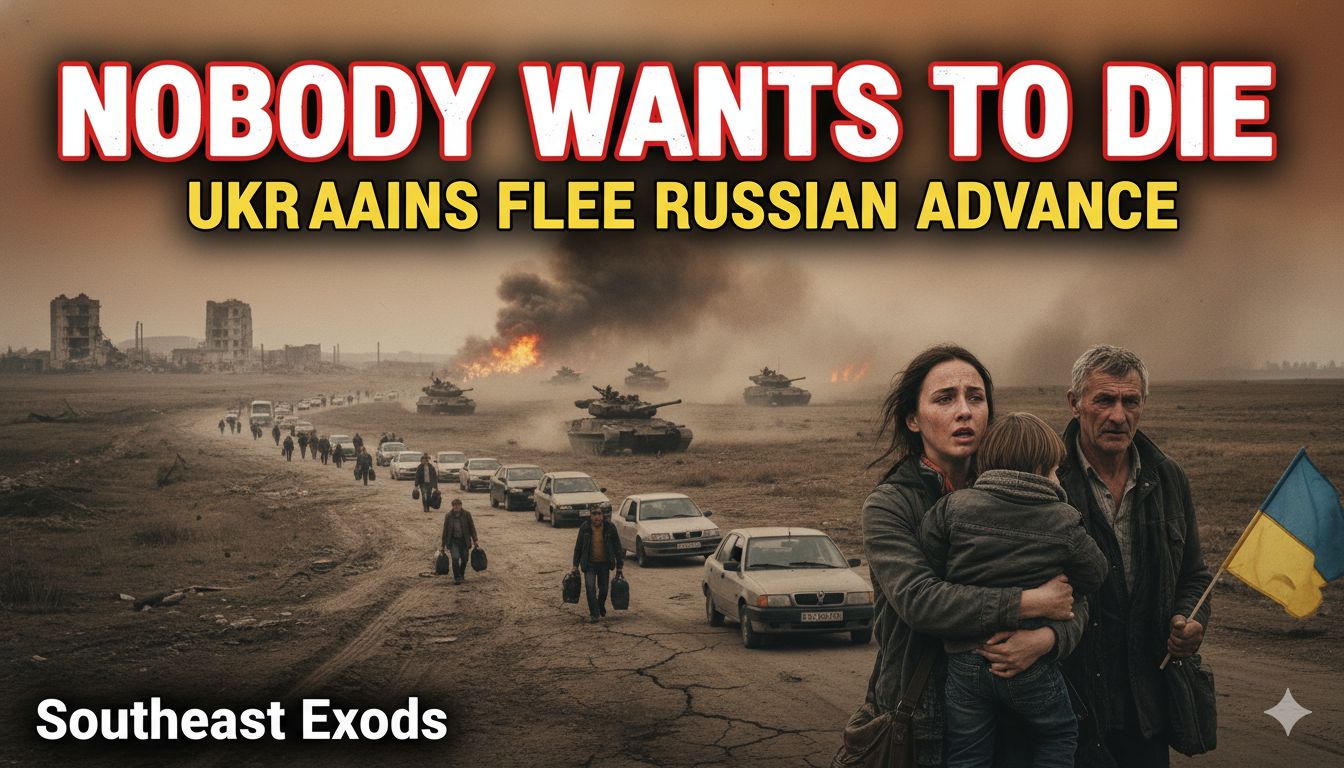
As Russian forces press forward in Ukraine’s southeast, civilians in villages near the Zaporizhzhia front are abandoning their homes in growing numbers, facing relentless drone strikes, artillery fire, and the constant threat of death. Police and volunteers conduct urgent evacuations along exposed roads, while a converted transit center in Zaporizhzhia city has already processed thousands of displaced people since late 2025. These departures occur even as U.S.-brokered peace talks continue, underscoring the widening gap between battlefield reality and diplomatic hopes.
The Grim Reality on Ukraine’s Southeastern Front
Villages such as Tavriiske and Yurkivka, once home to families who hoped the war would spare them, now stand largely deserted. Regular bus service from Zaporizhzhia city, roughly 50 kilometers away, has halted. Residents rely on police convoys and volunteer teams that navigate roads draped in anti-drone netting to reach those still holding out. Almost no families remain in the communities surrounding Tavriiske, local officials report. The area forms a vulnerable bulge in the front line, exposed to attacks from multiple directions.
Russian troops have made incremental but persistent gains toward Zaporizhzhia city, one of the four regions Moscow claims despite controlling only part of it. Fighting has intensified particularly around Huliaipole, about 40 kilometers east of Tavriiske. Advances in this sector have brought the front line closer to the regional capital, shrinking distances that once offered a buffer. Glide bombs, fiber-optic guided drones, and artillery have become daily realities, destroying homes, cutting supply lines, and forcing residents to choose between staying and risking everything.
Personal Stories of Despair and Decision
Maryna Vyshnevska, a 35-year-old mother of five, finally left Tavriiske after weeks of mounting danger. She had hoped Ukrainian forces would push the Russians back, but the situation only worsened. Packing what she could onto a police evacuation vehicle, she explained that leaving was the only way to protect her children. Her story echoes that of many who delayed departure until the risk became unbearable.
Nataliia Fedorenko, 66, broke down in tears as she was helped from her modest home. She spoke of the terror that now defines daily life, saying the thought of dying in this manner was unbearable. An elderly woman from a nearby village was carried to safety on an improvised stretcher, her belongings hastily gathered. Volunteers like Vlad Makhovskyi, wearing tactical gear, described seeing more destruction and higher risks with each passing week as they assisted these operations.
Humanitarian Challenges and Support Systems
In Zaporizhzhia city, a former assisted-living facility now functions as a central transit hub for the displaced. Since November 2025, more than 2,800 people have passed through, including 560 children and 849 individuals with disabilities. Staff provide emergency cash, help replace lost documents, and coordinate onward travel, often powered by generators amid widespread power shortages caused by strikes on energy infrastructure.
Mandatory evacuations have been ordered in several districts around the city. Authorities focus on vulnerable groups—large families, the elderly, and those with limited mobility—sometimes enforcing departures when parents hesitate. Roads to safer areas remain hazardous, marked by the wreckage of vehicles hit by drones. Supplies no longer reach many frontline settlements, leaving those who stay without reliable access to food, medicine, or heat in freezing winter conditions.
Military Pressure and Strategic Implications
| Key Evacuation Figures (Zaporizhzhia Region, Late 2025–Early 2026) | Number |
|---|---|
| People processed through Zaporizhzhia transit center since November 2025 | 2,800+ |
| Children among those processed | 560 |
| People with disabilities among those processed | 849 |
| Remaining residents needing evacuation in select districts (early February estimates) | 500+ |
| Total evacuations from frontline areas since June 2025 (regional data) | 150,000+ |
Russian forces continue probing Ukrainian defenses with small assault groups, supported by overwhelming numbers of drones and artillery. While gains remain slow and costly, the pressure in the southeast has created new urgency for Ukrainian commanders. The region holds strategic value—home to major industry, the Dnipro hydroelectric dam, and Europe’s largest nuclear plant, now under Russian control. Any further advance would bring Zaporizhzhia city within closer range of sustained bombardment.
These movements occur alongside ongoing operations in Donetsk, where Russian troops continue to close in on fortified positions. The combined pressure stretches Ukrainian resources at a time when mobilization challenges and winter weather complicate defensive efforts.
Broader Context of Displacement
The current wave of departures in Zaporizhzhia adds to a national crisis that has displaced millions since 2022. Internally displaced persons and refugees now number in the tens of millions when including those who have left the country. Frontline communities face the harshest conditions, with limited access to services and constant fear of strikes. Peace talks in Abu Dhabi, facilitated by the United States, have yet to produce a breakthrough that would ease the suffering on the ground.
Disclaimer: This is a news report based on field observations and official statements. It does not constitute advice or endorsement of any position.