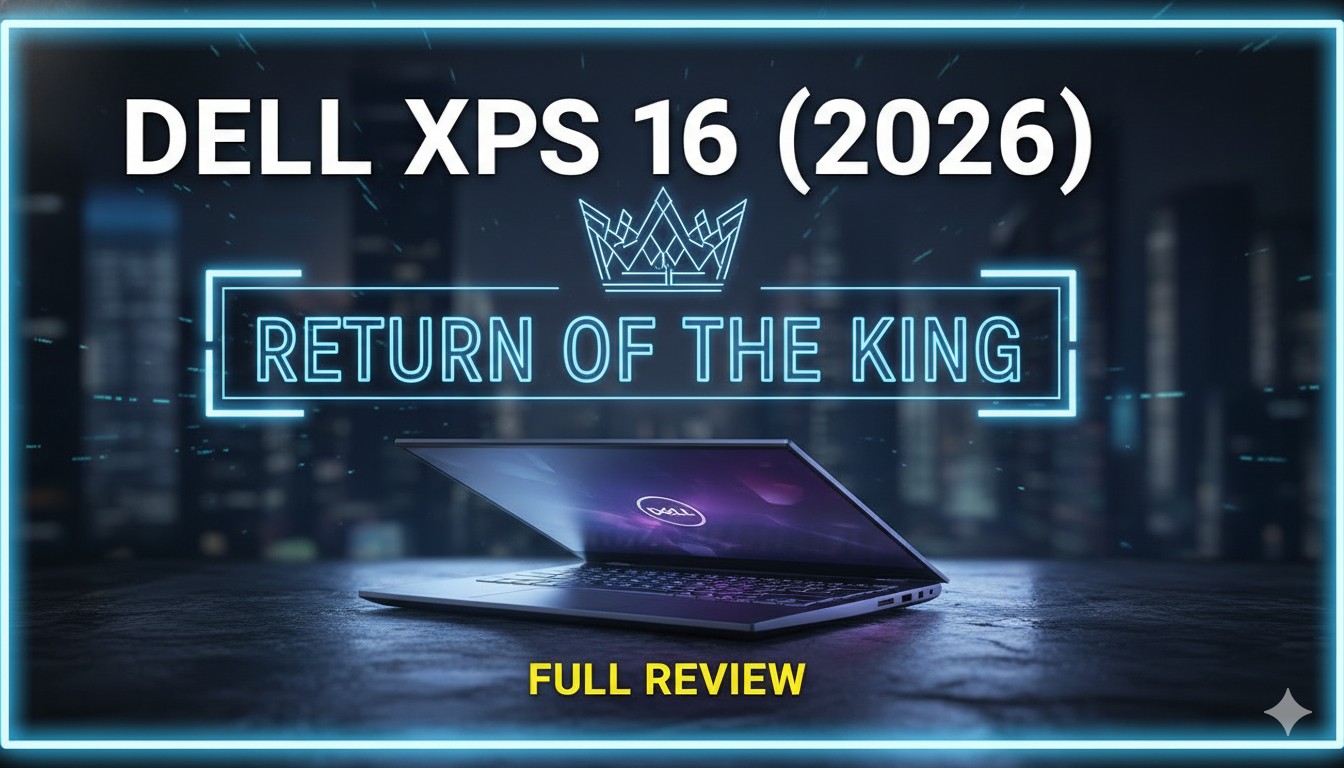
The Dell XPS 16 (2026) marks a triumphant revival of the iconic XPS lineup, blending premium build quality, stunning display options, and solid performance in a more portable chassis. After a brief hiatus and rebranding shakeup, Dell brings back the XPS name with refreshed designs that ditch controversial elements like the capacitive touch bar, introduce variable refresh rate down to 1Hz for better efficiency, and leverage the latest Intel Core Ultra processors for enhanced AI capabilities and battery life. While pricing remains steep and some trade-offs in thermal management persist, this model reclaims its throne as a top contender for creators, professionals, and power users seeking a luxurious 16-inch Windows machine.
Design and Build Quality
The 2026 XPS 16 arrives as a refined evolution, responding to user feedback on previous generations. Dell has streamlined the aesthetic to feel modern and less corporate, with clean lines, premium materials, and a focus on portability. The chassis uses high-quality aluminum construction paired with carbon fiber palm rests in select configurations, delivering a rigid, premium feel without excessive weight.
At roughly the dimensions of many 15-inch competitors but with a true 16:10 aspect ratio 16-inch display, it achieves an impressively compact footprint for its class—often described as one of the smallest full 16-inch laptops available. The bezels are razor-thin, especially on the sides and top, maximizing screen real estate while keeping the overall body manageable for travel or desk use.
Port selection emphasizes versatility: three modular Thunderbolt 4/USB-C ports (configurable for different needs), a 3.5mm headphone jack, and no legacy ports cluttering the design. The hinge offers smooth, stable operation with a wide opening angle suitable for presentations or collaborative work.
One major win is the return to a traditional function row and physical keys, eliminating the divisive seamless touch bar from prior models. The keyboard features excellent travel, crisp feedback, and a spacious layout that feels comfortable for extended typing sessions. The haptic touchpad is large, responsive, and precise, with customizable feedback levels.
Display Excellence
The centerpiece is the display, available in multiple configurations to suit different workflows. Base options include a high-resolution LCD panel, but the standout is the optional OLED variant with touch support, delivering infinite contrast, vibrant colors, and deep blacks ideal for content creation, photo editing, and media consumption.
Refresh rates now dip as low as 1Hz in variable modes, significantly boosting battery efficiency during light tasks while scaling up for smooth scrolling or video playback. Peak brightness reaches impressive levels for indoor and even outdoor visibility in many setups, with excellent color accuracy out of the box—covering wide gamuts suitable for professional creative work.
The 8MP webcam upgrade provides sharp video quality with Windows Hello facial recognition, a step up from previous generations and competitive in the premium segment.
Performance and Hardware
Powered by Intel’s latest Core Ultra Series processors (Panther Lake architecture), the XPS 16 delivers strong multi-threaded performance for demanding applications like video editing, 3D rendering, and AI-accelerated tasks. Configurations range from entry-level Core Ultra 5 to higher-end Core Ultra 7 models, paired with integrated graphics or optional discrete NVIDIA GeForce options.
Battery life stands out as a highlight, with Dell claiming industry-leading endurance thanks to efficient silicon and the low-refresh display tech—real-world mixed use often exceeds expectations for a high-end 16-inch machine.
Thermal management has improved over past XPS models, though sustained heavy loads can still lead to noticeable warmth and fan activity. The discrete GPU, when equipped, provides capable performance for creative workloads but may not reach full potential in the slim chassis compared to thicker gaming-oriented laptops.
Audio and Other Features
Audio gets a boost with a quad-speaker setup tuned for Dolby Atmos, delivering clear, balanced sound with decent bass for a laptop—suitable for media playback without external accessories.
Connectivity benefits from the latest Wi-Fi standards and Bluetooth for reliable wireless performance.
Key Specifications Comparison
| Feature | Details |
|---|---|
| Processor | Intel Core Ultra Series (up to Ultra 7) |
| Graphics | Integrated or NVIDIA GeForce discrete |
| Display | 16-inch, up to OLED touch, variable 1Hz+ refresh |
| Memory | Up to high-capacity LPDDR configurations |
| Storage | Fast PCIe SSD options |
| Ports | 3x Thunderbolt 4/USB-C, headphone jack |
| Webcam | 8MP with IR for Windows Hello |
| Audio | Quad speakers, Dolby Atmos |
| Starting Price | Around $1,750–$2,200 depending on config |
In a market crowded with ultrabooks and creator machines, the XPS 16 (2026) stands tall by addressing past criticisms while preserving the premium DNA that made the line legendary. It may not dominate every benchmark, but its blend of elegance, display prowess, and everyday usability makes it a compelling choice for those who demand the best in a Windows laptop.
Disclaimer: This is an independent review based on hands-on testing and market analysis. Prices and availability may vary.