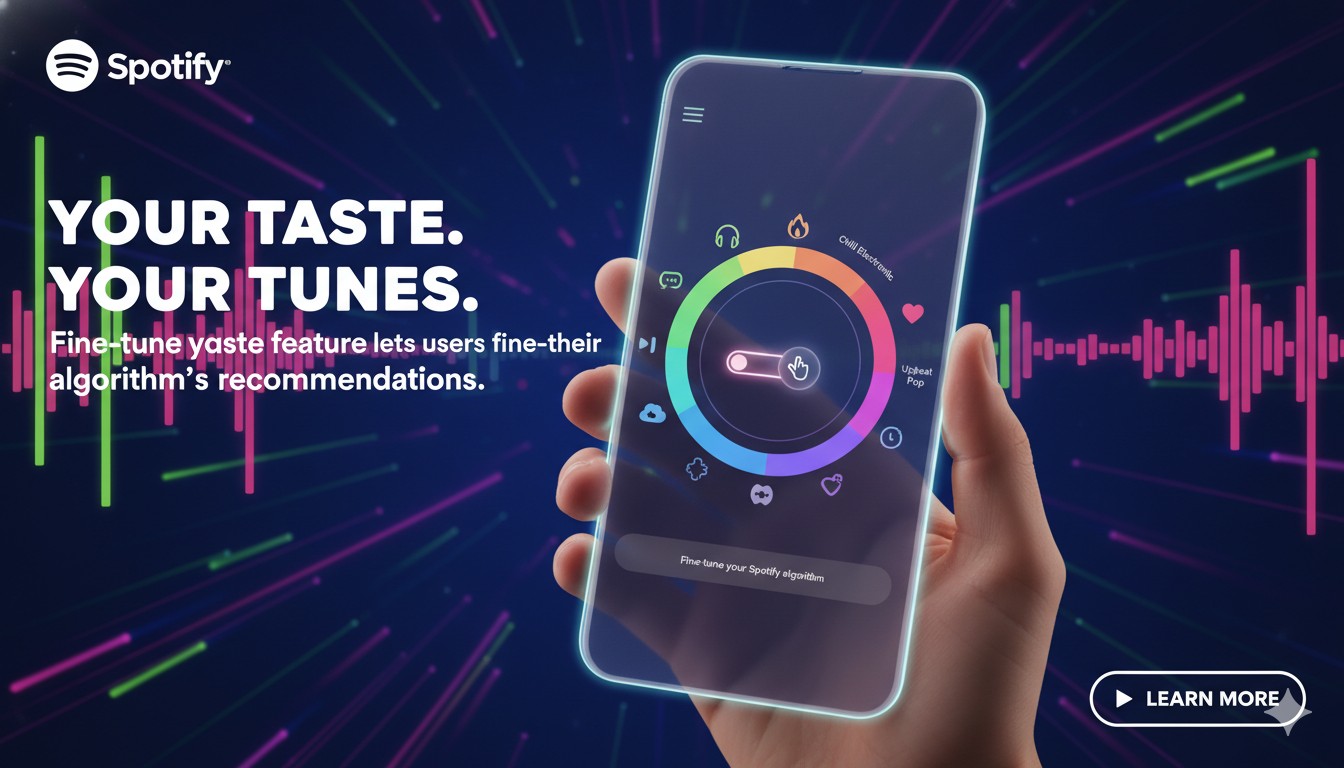
Spotify has unveiled Taste Profile, a groundbreaking beta feature announced at SXSW that allows Premium users to view, review, and directly shape their algorithmic taste model. By integrating listening data from music, podcasts, and audiobooks, the tool provides visibility into habits and preferences while enabling natural language inputs to request more or less of specific vibes, genres, or moods—ultimately steering personalized recommendations across the platform’s homepage, Discover Weekly, and beyond. Initial rollout targets Premium subscribers in New Zealand, marking a significant step in user-controlled personalization.
Spotify Rolls Out Direct Control Over Personalized Recommendations
Spotify continues to push the boundaries of music streaming personalization with the introduction of its Taste Profile feature, announced recently by Co-CEO Gustav Söderström during a keynote at SXSW in Austin. This new capability represents the latest evolution in how the platform interprets and responds to individual listener preferences, moving beyond passive data collection to active user participation.
At its core, Taste Profile serves as a transparent window into Spotify’s understanding of a user’s musical and audio identity. It aggregates signals from across the ecosystem—including tracks streamed, podcasts subscribed to, audiobooks explored, repeat listens, skip patterns, and time-of-day habits—to construct a comprehensive portrait of tastes. Previously, this model operated largely behind the scenes, powering staples like Discover Weekly playlists, Daily Mixes, Release Radar, Made For You sections, and the annual Wrapped summary. Now, for the first time, users can access this profile directly within the app.
To engage with the feature, Premium subscribers tap their profile icon and navigate to the Taste Profile section, typically found in the sidebar or settings menu depending on the rollout phase. The interface displays a dynamic summary highlighting key elements: top artists and genres currently influencing recommendations, emerging trends in listening behavior (such as a shift toward vocal-driven modern tracks or explorations into 90s alternative rock), and contextual insights like mood-based patterns or situational preferences.
One of the most compelling aspects is the interactive feedback mechanism. At the bottom of the Taste Profile view sits a prominent “Tell us more” prompt box. Here, users input natural language requests to refine the algorithm in real time. Examples include directing the system toward “more high-energy hip-hop for workouts,” “less indie folk and more electronic beats,” or even contextual cues like “upbeat tracks for marathon training” and “thought-provoking news podcasts during commutes.” The AI-powered system processes these inputs to adjust prioritization—amplifying desired elements while dialing back others—directly impacting what appears on the homepage feed and in personalized playlists.
This level of granularity addresses long-standing user frustrations. Shared household accounts, one-off listens to kids’ music or sleep sounds, or experimental dives into unfamiliar genres have historically skewed recommendations. Earlier tools allowed exclusion of specific tracks or playlists from influencing the taste model, but Taste Profile takes this further by offering proactive shaping rather than just reactive exclusion.
The beta launch begins with Premium users in New Zealand over the coming weeks, a common testing ground for Spotify’s experimental features due to its manageable market size and engaged user base. Expansion to additional markets and potentially broader user tiers is anticipated, though no firm timeline has been shared.
In practice, Taste Profile unifies disparate audio consumption under one editable framework. Music fans can emphasize guitar-driven sounds or emerging subgenres, podcast enthusiasts can prioritize deep dives into true crime or business analysis, and audiobook listeners can signal preferences for certain narrators or fiction styles. The holistic approach ensures recommendations feel more cohesive, reducing the jarring shifts between music and spoken-word content that some users encounter.
Spotify’s personalization engine has long relied on machine learning models that analyze billions of data points daily. Taste Profile introduces a human-in-the-loop element, where explicit user directives help calibrate these models more accurately. This could lead to sharper Discover Weekly editions, more relevant homepage carousels, and Wrapped recaps that better reflect intentional listening rather than algorithmic assumptions.
As streaming competition intensifies, features like this highlight Spotify’s commitment to user agency. By handing over the reins of the recommendation engine, the platform transforms passive consumption into a collaborative experience, where listeners actively co-create their audio world.
Disclaimer: This is an informational news report based on publicly available announcements and feature details. Streaming services and features are subject to ongoing updates and availability may vary by region and subscription type.