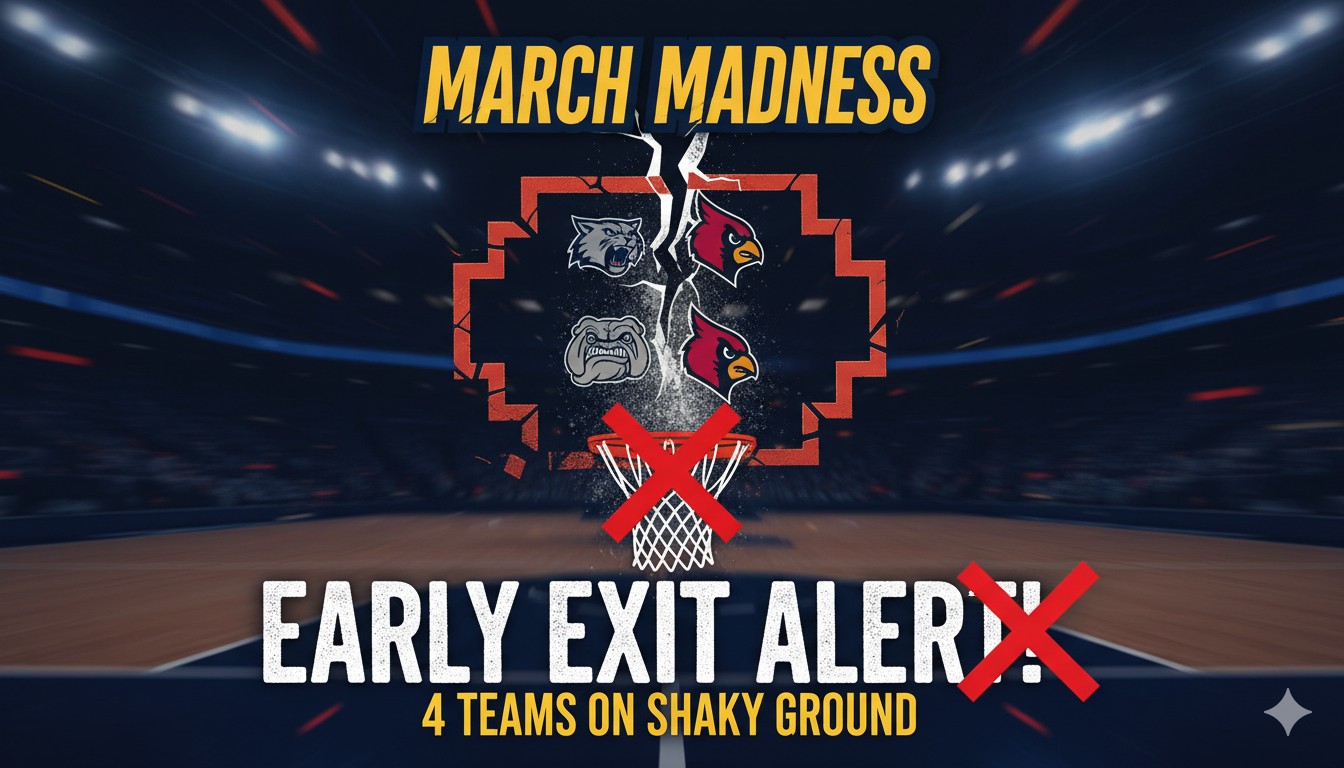
“March Madness often delivers chaos in the early rounds, and this year’s field features several higher-seeded teams whose flaws—defensive lapses, reliance on streaky shooting, or tough opening opponents—could lead to shocking early departures and busted brackets nationwide.”
Teams Ripe for an Early Exit
Several teams projected to make the field carry red flags that could spell trouble once the tournament tips off. Here are four particularly at risk, based on current bracket projections, team trends, and matchup dynamics.
BYU Cougars The Cougars have seen their stock slide dramatically in recent weeks after a promising start. Once viewed as a potential top-16 overall seed, BYU now fights to stay in the top half of the bracket—or even secure a spot at all. Their resume includes solid wins but too many confusing losses and close calls against lesser competition. Offense relies heavily on perimeter shooting, which can go cold in high-pressure NCAA environments, and their defense has shown vulnerabilities against athletic, quick-tempo teams. In a likely mid-seed matchup (projected around 7-9 line), they draw a dangerous lower seed with momentum from a conference tournament run or a Cinderella story. BYU’s lack of depth and recent form make them susceptible to a first-round exit, especially if they face a team that forces turnovers and exploits transition opportunities.
Louisville Cardinals Under new leadership, Louisville has shown flashes of potential with close losses to elite programs like South Carolina, UConn, Kentucky, and Duke. Those results highlight competitiveness against top competition, but consistency remains an issue. The Cardinals’ path could place them in a region with strong defensive-minded squads or high-scoring offenses that expose their occasional lapses in rebounding and interior protection. As a projected mid-to-lower seed (potentially 8-10 range), Louisville risks an immediate test against a hot mid-major or a veteran group that matches their physicality. Their youth in key spots and reliance on a few scorers could lead to foul trouble or cold shooting nights, paving the way for an upset and an early flight home.
Gonzaga Bulldogs Gonzaga’s streak of consecutive NCAA appearances remains intact, but this version looks shakier than recent squads. The Bulldogs have battled through injuries and inconsistencies, often struggling to pull away from lesser opponents. Their offense, while potent when clicking, can stall against zone defenses or teams that pack the paint. Projected as a mid-seed (around 7-9), Gonzaga frequently draws challenging first-round opponents from power conferences or hot mid-majors. Historical trends show the Zags have avoided one-and-done exits in recent years, but current roster dynamics—less depth and occasional defensive breakdowns—make them vulnerable. A matchup against a disciplined, rebounding-heavy team could exploit these weaknesses and send Mark Few’s group packing early.
Wisconsin Badgers As a projected higher seed in some brackets (potentially No. 3-6 range), Wisconsin appears solid on paper with strong Big Ten play. However, experts have flagged them as a prime “fade” candidate due to vulnerabilities in transition defense and against teams that shoot well from deep. The Badgers’ physical, half-court style works in conference but can struggle in the neutral-site, fast-paced NCAA environment. If placed in a region with athletic, up-tempo opponents or double-digit seeds riding momentum, Wisconsin could face immediate pressure. Recent tournament history shows several high seeds from power leagues exiting early when matchups don’t favor their pace, and Wisconsin fits that profile perfectly—ripe for a surprising Round of 64 loss that derails brackets.
Key Factors Contributing to Early Exits
Matchup Nightmares — Neutral-site games amplify weaknesses; teams facing altitude changes, long travel, or styles that counter their strengths (e.g., poor perimeter defense vs. three-point heavy squads) often falter.
Injury and Depth Issues — Several squads deal with nagging injuries or thin benches, reducing resilience in back-to-back tournament games.
Momentum vs. Resume — Bubble and mid-seed teams with late surges from conference tournaments carry confidence, while higher seeds on cold streaks struggle.
Bracket Placement — Early draws against veteran mid-majors or power-conference foes with revenge motives increase upset odds.
| Team | Projected Seed Range | Primary Vulnerability | Likely Upset Scenario |
|---|---|---|---|
| BYU Cougars | 7-10 | Streaky shooting, defensive lapses | First-round vs. hot mid-major forcing turnovers |
| Louisville Cardinals | 8-11 | Inconsistency, rebounding issues | Round of 64 against physical, veteran squad |
| Gonzaga Bulldogs | 7-9 | Depth concerns, zone defense struggles | Immediate test vs. rebounding-heavy opponent |
| Wisconsin Badgers | 3-6 | Transition defense, pace mismatches | High-seed fade vs. athletic, deep-shooting team |
These four teams highlight the unpredictability of March. While chalk often prevails deeper in the bracket, the opening weekend thrives on surprises, and these squads possess the flaws that savvy bracket fillers target for upsets. With Selection Sunday looming and conference tournaments ongoing, final seedings could shift dynamics, but the warning signs remain clear for these potential early casualties.
Disclaimer: This article is for informational and entertainment purposes only, reflecting analysis of current trends and projections in college basketball. Bracket outcomes depend on numerous variables including performance, injuries, and officiating.