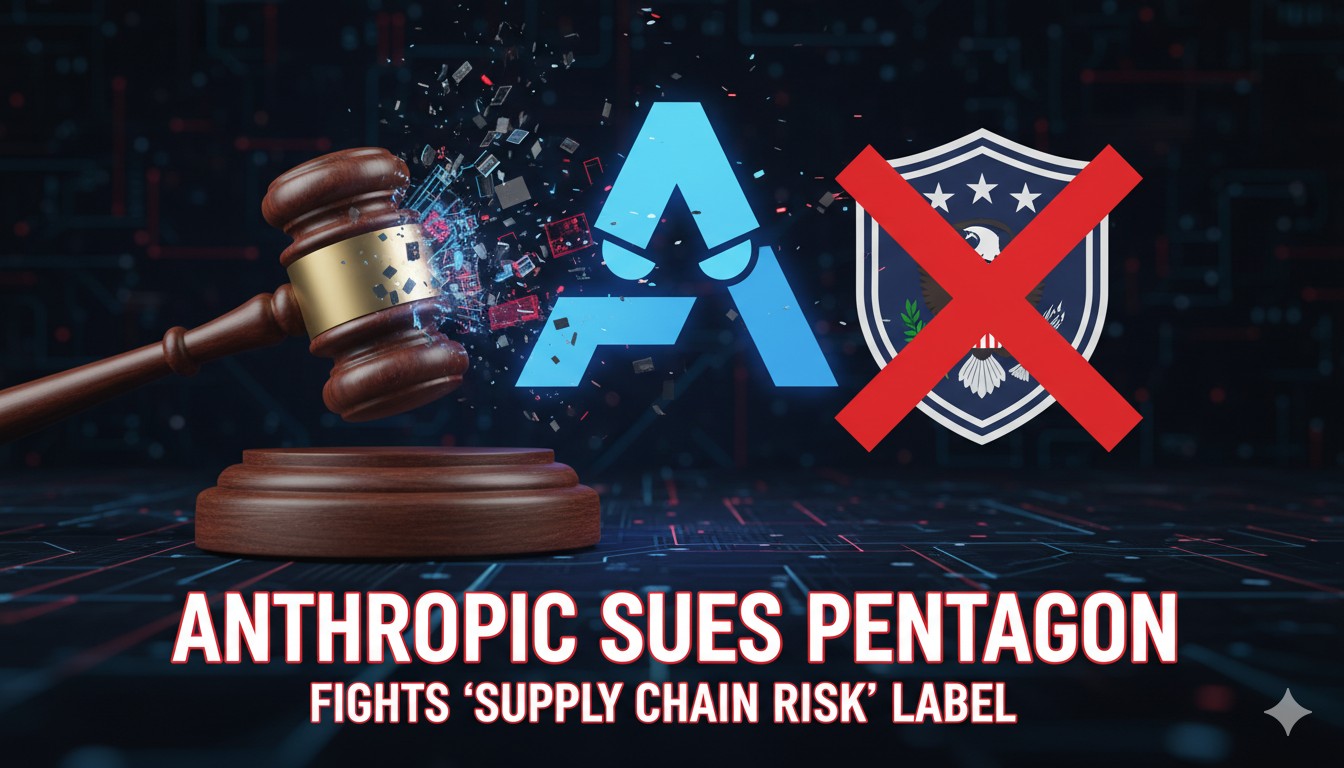
“In a bold escalation of tensions between Silicon Valley and national security priorities, AI pioneer Anthropic has announced it will challenge the Department of Defense’s designation of the company as a supply-chain risk in federal court. The label, traditionally reserved for foreign adversaries like Huawei or Kaspersky, marks a historic first for an American firm and stems from a breakdown in negotiations over military use restrictions on Anthropic’s Claude AI model. The move could disrupt government contractors’ access to advanced AI tools while raising profound questions about executive authority, corporate safeguards in AI deployment, and the balance between innovation and defense needs.”
Pentagon’s Supply Chain Risk Designation Sparks Legal Showdown
The Department of Defense has formally designated Anthropic as a supply-chain risk under relevant statutes, effective immediately. This action follows directives from the highest levels of the administration, including a presidential order directing all federal agencies to cease using Anthropic’s technology and a subsequent Defense Secretary announcement labeling the company a national security concern.
The designation traces back to protracted negotiations between Anthropic and Pentagon officials regarding the terms under which the military could deploy Claude, the company’s flagship large language model. Anthropic sought specific exceptions prohibiting the use of its AI for mass domestic surveillance of U.S. citizens and for fully autonomous lethal weapons systems. The Defense Department insisted on unrestricted access for all lawful purposes, without such carve-outs.
When talks stalled, the Pentagon invoked supply chain risk authorities, a mechanism designed to protect sensitive military information technology systems from potential subversion, sabotage, or malicious interference. Historically applied to entities linked to adversarial nations, this represents the first known public application to a U.S.-based company.
Anthropic’s leadership, including CEO Dario Amodei, has described the designation as “legally unsound” and an overreach that sets a dangerous precedent. The company argues that the label exceeds statutory bounds under provisions like 10 U.S.C. § 3252, which limits scope to excluding designated technologies from specific DoD contracts involving critical systems such as intelligence, command and control, or weapons platforms. Anthropic maintains that the designation cannot legally prohibit broader commercial relationships or force defense contractors to sever all ties with the company.
In detailed statements, Anthropic emphasized its commitment to supporting U.S. national security efforts within ethical boundaries. The company has offered to assist with a transition period for any affected government users and reiterated willingness to collaborate on defense applications that align with its principles. However, it drew a firm line against capabilities enabling unchecked surveillance or autonomous decision-making in lethal contexts.
The immediate implications for the defense ecosystem are significant. Contractors and subcontractors performing work for the Pentagon must review any integration of Claude or other Anthropic products into their offerings. While the designation primarily restricts use in direct DoD procurements, broader interpretations could pressure partners to avoid commercial dealings with Anthropic to maintain eligibility for military contracts.
| Aspect | Details |
|---|---|
| Statutory Basis | Primarily 10 U.S.C. § 3252 and related DFARS provisions (48 C.F.R. § 239.73) |
| Scope of Restriction | Exclusion of Anthropic tech from sensitive DoD IT systems; no broad ban on all commercial activity |
| Historical Precedent | Previously applied to foreign entities (e.g., Huawei, Kaspersky); first for U.S. company |
| Trigger | Dispute over AI use exceptions: mass domestic surveillance and fully autonomous weapons |
| Anthropic’s Position | Will challenge in court; calls action unprecedented and legally flawed |
| Government Actions | Presidential directive to cease federal use; DoD formal designation effective immediately |
This dispute highlights growing friction in the AI-defense nexus. As frontier models like Claude advance, questions intensify about governance, red lines in military applications, and the extent of government leverage over private innovators. The Pentagon’s move follows its pursuit of partnerships with other AI providers, underscoring a strategic push for reliable access to cutting-edge capabilities amid geopolitical pressures.
Anthropic’s planned litigation could test the limits of executive authority in national security designations. Legal experts anticipate challenges on procedural grounds, including whether required findings by contracting and security officials supported the risk assessment, and substantive arguments that the designation misapplies statutory intent meant for adversarial threats rather than policy disagreements.
For enterprise users outside direct DoD ties, the designation appears to have limited direct impact, allowing continued commercial use in non-restricted contexts. Anthropic has clarified that contractors can still leverage Claude for non-Pentagon clients without violating the designation’s narrow legal reach.
The outcome of this court challenge will likely influence future negotiations between AI firms and government entities, potentially shaping how ethical constraints are negotiated in high-stakes national security deals. As the case unfolds, it serves as a pivotal moment in the evolving relationship between private AI development and U.S. defense imperatives.
Disclaimer: This is a news report based on publicly available information and does not constitute legal, investment, or policy advice.