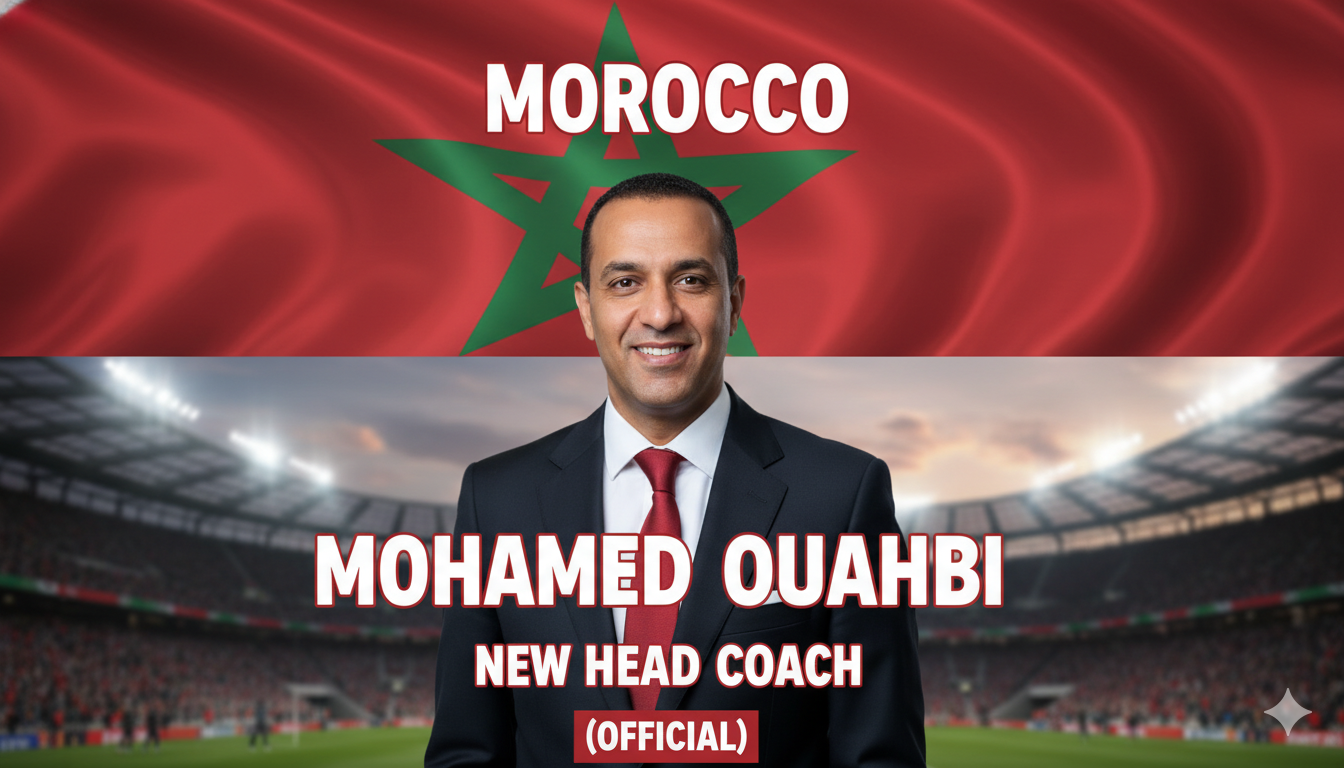
In a bold move to build on recent successes and youth development momentum, the FRMF has elevated Mohamed Ouahbi—celebrated for guiding Morocco’s U20 side to a historic World Cup triumph—to lead the senior Atlas Lions, succeeding Walid Regragui amid preparations for the upcoming global showcase.
Mohamed Ouahbi Takes Charge of Atlas Lions
The appointment of Mohamed Ouahbi, announced following a press conference at the Mohammed VI Football Complex near Rabat, represents a strategic shift toward continuity and internal progression within Moroccan football. At 49 years old, Ouahbi brings a wealth of experience rooted in youth academies and national team structures, having spent significant time honing talent at Belgian club Anderlecht before joining the Royal Moroccan Football Federation (FRMF) setup.
Ouahbi’s rapid rise through the ranks began notably in March 2022 when he was named head coach of Morocco’s U20 national team. His crowning achievement came with leading the side to victory in the FIFA U20 World Cup, a first for Morocco at that level and a testament to the country’s growing investment in grassroots and youth development under FRMF president Fouzi Lekjaa. This success propelled him to the U23 role in December 2025, where he continued to emphasize tactical discipline, player integration, and competitive mentality.
The decision to promote Ouahbi follows the departure of Walid Regragui, whose tenure delivered landmark moments including Morocco’s unprecedented semifinal run at the 2022 FIFA World Cup in Qatar—the first by an African or Arab nation—and strong performances in subsequent continental competitions. Regragui’s exit, confirmed recently, paves the way for this internal handover, mirroring his own promotion from club level to national team duties in 2022.
Ouahbi inherits a talented and youthful squad featuring established stars such as Achraf Hakimi, Sofyan Amrabat, and emerging talents who have benefited from the federation’s academy system. The team remains competitive on the African stage and holds high expectations for the 2026 World Cup, where Morocco will aim to leverage home-continent momentum and the expanded 48-team format.
Supporting Ouahbi in this new role is a reinforced technical staff, including Portuguese coach João Sacramento, whose background includes stints at high-profile clubs like Paris Saint-Germain, AS Roma, and Tottenham Hotspur. Sacramento’s addition brings international expertise in modern tactics, player management, and high-performance environments, complementing Ouahbi’s deep understanding of Moroccan football culture.
In his initial statements following the appointment, Ouahbi expressed profound gratitude to King Mohammed VI for continued support of the sport, as well as to Lekjaa for the trust placed in him. He committed to leading with seriousness, humility, determination, and patriotism, describing the current Atlas Lions squad as young, fearless, and full of potential to elevate Moroccan pride on the world stage. He also paid tribute to Regragui, acknowledging the solid foundation and progressive team left behind.
This appointment aligns with broader FRMF objectives of long-term growth, bridging youth success to senior-level achievements while targeting sustained excellence through 2030, when Morocco co-hosts the World Cup alongside Spain and Portugal. With the 2026 tournament approaching rapidly, Ouahbi faces immediate challenges in squad selection, tactical refinement, and friendly or qualifier preparations to maintain the Atlas Lions’ upward trajectory.
Key elements of Ouahbi’s philosophy, drawn from his youth successes, include structured play, emphasis on technical proficiency, and fostering a no-complex mindset among players—qualities that helped the U20 team overcome global opposition en route to glory.
Morocco National Team Coaching Timeline (Recent)
Walid Regragui: Appointed 2022 – Led to 2022 World Cup semifinal, strong Africa Cup showings – Departed 2026
Mohamed Ouahbi: Appointed March 2026 – Former U20 World Cup winner, U23 coach – Current senior head coach
The move underscores Morocco’s confidence in its homegrown coaching talent and development pipeline, positioning the nation not just as a participant but as a serious contender on the international scene.