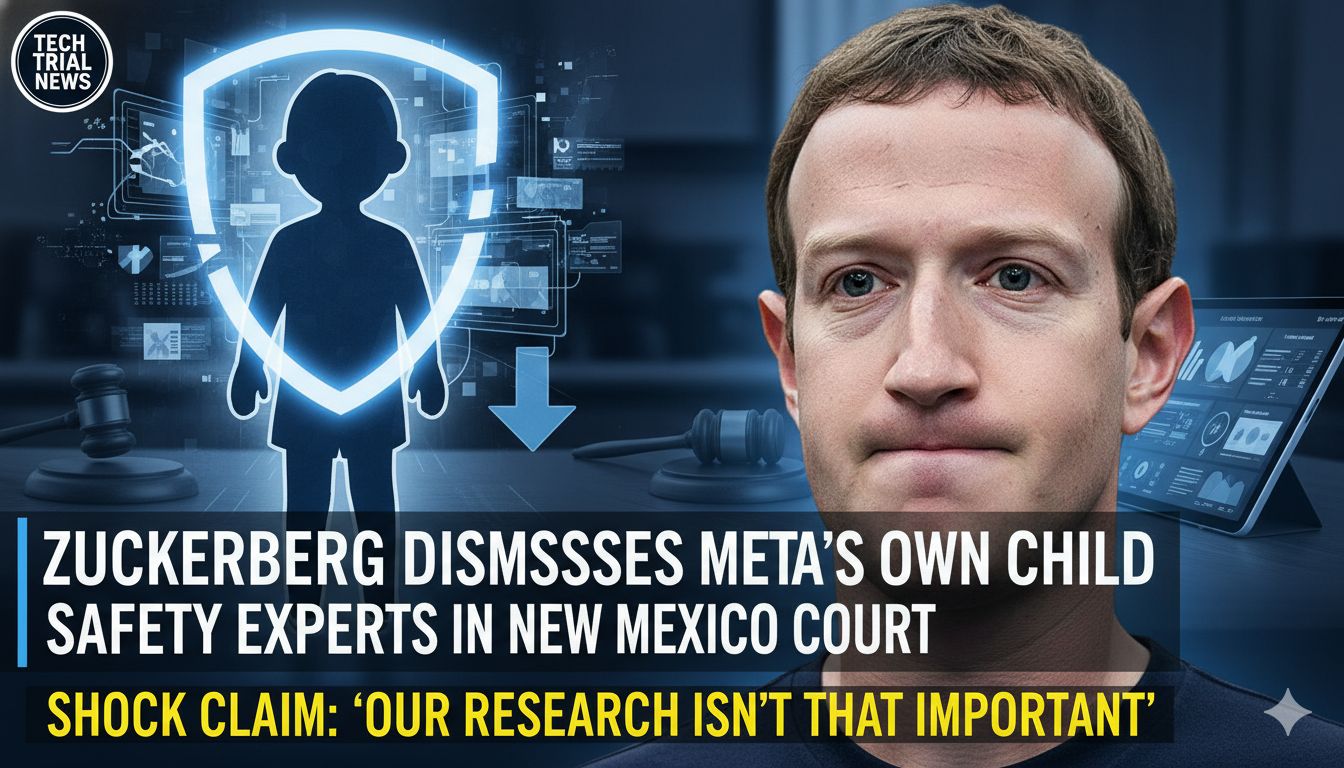
“In a high-stakes consumer protection trial in Santa Fe, New Mexico, Meta CEO Mark Zuckerberg’s pretrial deposition was played for jurors, where he repeatedly minimized the weight of his company’s own internal studies and user feedback on potential harms to young users, including questions of addictiveness and negative experiences on platforms like Instagram and Facebook. The testimony highlights ongoing scrutiny over what Meta knew about risks to children and how it addressed them amid allegations of failing to disclose dangers related to addiction and child exploitation.”
Zuckerberg Deposition Takes Center Stage in Bellwether Trial
Jurors in the New Mexico child safety bellwether trial viewed portions of Meta CEO Mark Zuckerberg’s pretrial deposition on Wednesday, March 4, 2026. The deposition, recorded last year, featured pointed questioning from prosecutors about internal company documents, research findings, and user communications dating back to Facebook’s early days in 2008.
Prosecutors from the New Mexico Attorney General’s office presented evidence alleging that Meta violated state consumer protection laws by not adequately disclosing known risks associated with social media use, particularly concerning addiction and child sexual exploitation on platforms including Facebook, Instagram, and WhatsApp.
During the deposition, Zuckerberg was confronted with internal communications and research that discussed “problematic” usage patterns and potential addictive qualities of the platforms. One key exchange focused on user feedback over the past 15 years, where individuals repeatedly described Meta’s products as addictive.
When asked if it was true that users had told both the company and him personally about finding the products addictive, Zuckerberg responded by challenging the terminology. He noted that people often use the word “addictive” in a casual sense, but emphasized that this is not the intent behind the products’ design nor how he believes they function.
The CEO downplayed the significance of various internal documents shown to him. In one instance, prosecutors referenced a document containing a graph illustrating the effects of certain feedback mechanisms on Facebook users. Zuckerberg acknowledged the graph’s content but distanced himself from its implications, stating he was not familiar with the specific methodology used to generate the estimates.
Similar skepticism appeared when internal research on Instagram’s impact on teenagers was raised, including findings suggesting harm to a notable percentage of teens, particularly teenage girls. Zuckerberg questioned the context, reliability, and applicability of such studies, often framing them as limited in scope or not representative of overall platform effects.
The trial centers on claims that Meta prioritized engagement and growth over implementing sufficient safeguards against harmful experiences for minors. Prosecutors argue that the company failed to properly address or disclose dangers like compulsive use patterns and exposure to exploitation.
Meta’s defense maintains that the company actively discloses potential risks, invests heavily in content moderation, and deploys tools to remove harmful material. Representatives acknowledge that no system is perfect and some problematic content inevitably slips through, but stress ongoing improvements, including features like Teen Accounts with enhanced protections and parental oversight tools.
The deposition also touched on broader themes from Zuckerberg’s past statements, including congressional appearances where he expressed regret for families affected by tragedies linked to social media, though without accepting direct causation or full responsibility.
Additional context from related proceedings includes Meta’s efforts to balance privacy features, such as end-to-end encryption on Messenger, against child safety reporting obligations. Internal estimates have referenced large volumes of potential child sexual abuse material reports that could be affected by such changes, though the company maintains commitment to safety measures.
The New Mexico case, brought by Attorney General Raúl Torrez, represents one of several legal challenges nationwide scrutinizing social media’s role in youth mental health and protection from online harms. Prosecutors have positioned the depositions of Zuckerberg and Instagram head Adam Mosseri as key elements, with Mosseri’s testimony echoing similar defenses regarding research interpretations and platform priorities.
As the trial progresses, jurors continue to evaluate evidence on whether Meta’s practices constituted deceptive or unfair acts under state law, particularly in relation to what was known internally about youth experiences versus public disclosures.
Key Developments in the Trial
Focus on Internal vs. Public Knowledge : Prosecutors highlight discrepancies between Meta’s private research on teen impacts and external messaging.
Terminology Disputes : Zuckerberg’s reluctance to endorse “addictive” as a precise descriptor for platform effects.
Research Minimization : Repeated downplaying of methodologies, sample sizes, and conclusions in internal studies.
Safety Efforts : Meta emphasizes proactive steps like AI-driven moderation, age-gating enforcement, and specialized teen protections.
Broader Implications : The bellwether nature of the trial could influence similar cases across states.
This ongoing litigation underscores the tension between innovation in social connectivity and responsibilities to protect vulnerable users in an evolving digital landscape.
Disclaimer : This is a news report based on publicly available court proceedings and related developments. It does not constitute legal advice, investment guidance, or endorsement of any position in the ongoing litigation.