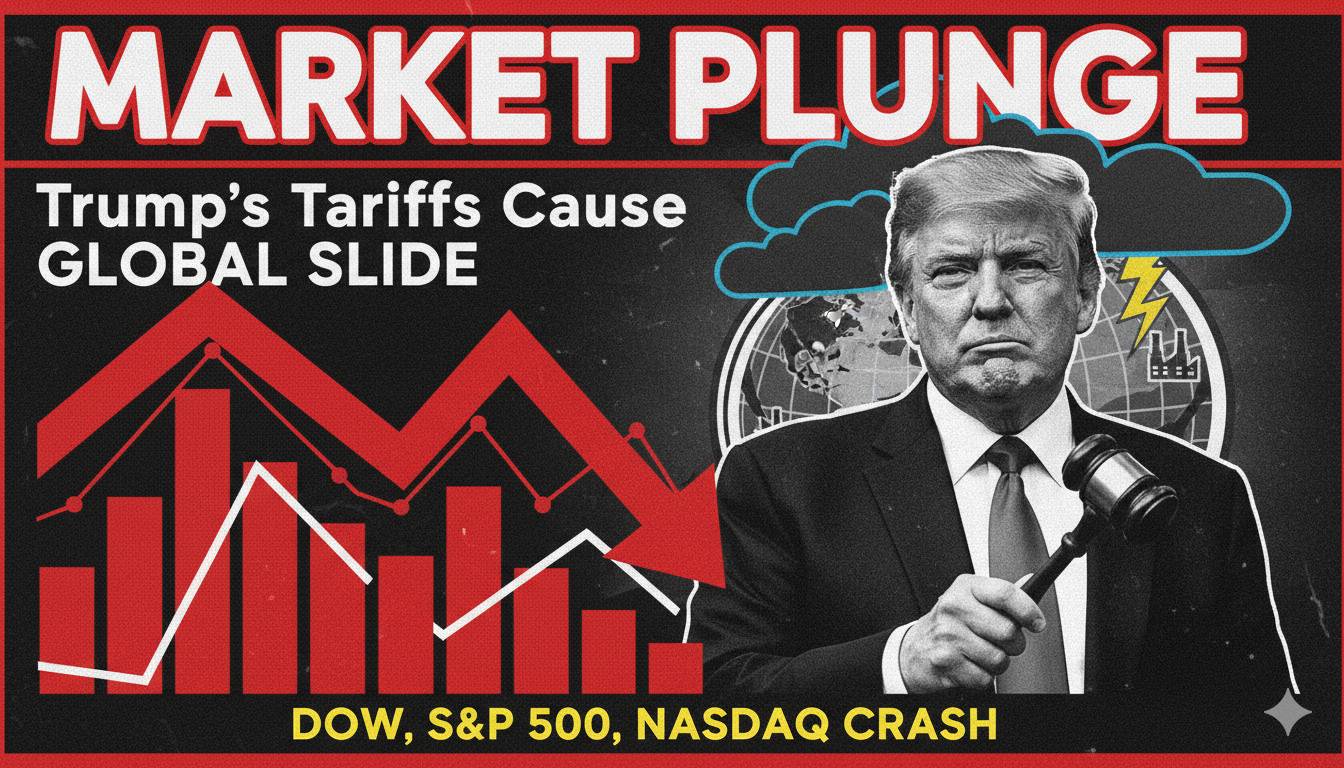
This rapid policy shift erased much of the optimism from Friday’s gains and triggered a sell-off, particularly in industrials and sectors sensitive to international trade costs. The Dow Jones Industrial Average led the declines, dropping over 700 points in intraday trading before closing with substantial losses. The S&P 500 and Nasdaq Composite also retreated, though to a lesser extent, as investors weighed potential inflationary pressures, supply chain disruptions, and retaliatory risks from trading partners.
**” In a swift reversal that caught many off guard, President Trump’s escalation to a 15% global tariff following the Supreme Court’s rebuke has reignited trade war fears, sending the Dow tumbling more than 1.5%, the S&P 500 down around 1%, and the Nasdaq sliding over 1% as markets digest higher import costs and economic uncertainty. “**
Stock Market Declines Amid Tariff Escalation
Wall Street’s reaction stemmed directly from the weekend developments. After the Supreme Court ruled 6-3 that the International Emergency Economic Powers Act does not grant the president authority to impose sweeping tariffs, markets had rallied on Friday, interpreting it as a potential de-escalation in trade tensions. The Dow gained modestly, the S&P 500 rose about 0.7%, and the Nasdaq advanced nearly 0.9% to close the week on a positive note.
That relief proved short-lived. Trump announced a new 10% tariff on imports from all countries under Section 122 of the Trade Act of 1974, a rarely used provision allowing temporary duties to address balance-of-payments issues. Within a day, he increased it to 15%, describing it as a necessary adjustment and set for a 150-day duration while longer-term solutions are pursued. This pivot was viewed by traders as more aggressive than anticipated, raising concerns about immediate cost increases for U.S. businesses reliant on global supply chains.
The Dow Jones Industrial Average fell approximately 1.5% to around 48,900, shedding roughly 700-800 points from recent levels near 49,600. Blue-chip names in manufacturing, retail, and transportation bore the brunt, as higher tariffs threaten to elevate input costs and squeeze margins. The S&P 500 declined about 1-1.2%, closing near 6,830-6,890 after starting the day with mixed futures. Broader market participation was evident, with cyclical sectors underperforming.
The tech-heavy Nasdaq Composite dropped 1.1-1.4%, pressured by multinational companies exposed to international revenue and sourcing. Growth-oriented stocks, already navigating valuation concerns, faced added headwinds from potential inflation and slower global growth.
Sector and Asset Class Impacts
Industrials and Materials : These sectors led losses, as companies with heavy import exposure anticipated higher expenses for raw materials and components.
Consumer Discretionary : Retailers and importers saw shares retreat amid fears of passing costs to consumers or absorbing them in already competitive margins.
Safe-Haven Assets : Gold rallied strongly, climbing toward record territory as investors sought protection from uncertainty. The U.S. dollar weakened modestly against major currencies.
Cryptocurrencies : Bitcoin and other digital assets declined, reflecting risk-off sentiment.
Bonds : Treasury yields dipped slightly, signaling expectations of potential economic softening.
Broader Economic Implications
The new 15% tariff applies broadly, potentially affecting over $1 trillion in annual imports, though exemptions and specifics remain under review. Analysts estimate it could raise the effective average tariff rate significantly in the short term, before any expiration after 150 days. This comes against a backdrop of already elevated trade barriers from prior measures, including Section 232 duties on steel and aluminum.
Investors are particularly focused on inflation risks: higher import prices could feed into consumer goods, complicating the Federal Reserve’s efforts to manage price stability. Supply chain reconfiguration might accelerate reshoring, but at the cost of near-term disruptions. Retaliation from major partners like the EU, China, and others could exacerbate pressures, though some countries signaled willingness to negotiate rather than immediately counter.
Market volatility has returned, with the VIX index spiking as traders position for ongoing headlines. While some view the Section 122 tariffs as temporary and legally distinct from the struck-down measures, the rapid escalation has heightened perceptions of unpredictability in U.S. trade policy.
Key Market Data Snapshot
Dow Jones Industrial Average: Down ~1.5-1.7% (approx. 700-800 points lost)
S&P 500: Down ~1.0-1.2%
Nasdaq Composite: Down ~1.1-1.4%
10-Year Treasury Yield: Slightly lower
Gold: Up significantly
U.S. Dollar Index: Modest decline
The session underscores how quickly sentiment can shift in response to policy announcements, leaving equities vulnerable to further developments in trade negotiations or legal challenges.
Disclaimer: This is general market commentary based on current events and should not be construed as personalized investment advice, financial recommendations, or a guarantee of future performance.