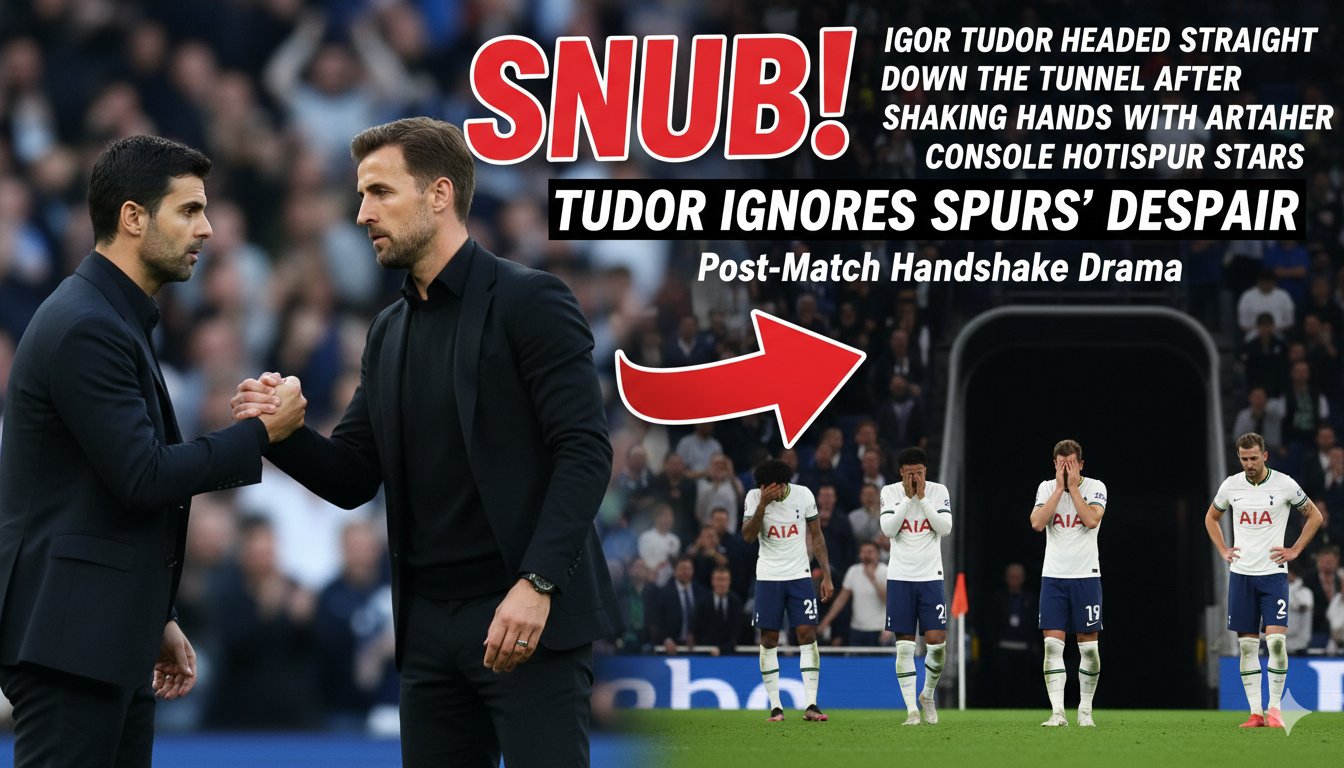
“In a moment that spoke volumes about the intensity and frustration at Tottenham Hotspur, interim manager Igor Tudor shook hands curtly with Mikel Arteta and marched straight down the tunnel following a 4-1 North London derby thrashing, bypassing his dejected players still on the pitch and highlighting the immediate challenges he faces in turning around a struggling squad.”
Tudor’s Dramatic First Game Ends in Tunnel Walk-Off
The final whistle at Tottenham Hotspur Stadium had barely sounded when interim head coach Igor Tudor made his feelings clear without uttering a word on the field. After a routine post-match handshake with Arsenal manager Mikel Arteta, the Croatian tactician turned directly toward the tunnel, descending the steps without pausing to offer consolation or encouragement to his Tottenham players who remained scattered across the grass, heads bowed in the aftermath of a punishing 4-1 loss to their fiercest rivals.
This was Tudor’s debut in the Tottenham dugout, stepping in as interim boss after the club’s recent managerial change amid a dismal run of form that has left Spurs precariously positioned in the Premier League table. The result against Arsenal—widely regarded as one of the league’s most formidable sides—exposed the gulf in quality and cohesion, with Arsenal dominating possession, creating high-quality chances, and capitalizing on Tottenham’s defensive vulnerabilities.
Tudor, known for his no-nonsense approach from previous stints in Serie A and elsewhere, had only days to prepare his team for this high-stakes encounter. Reports from inside the camp suggest he has already brought a louder, more direct style to training sessions, demanding accountability and intensity from a group that has struggled with consistency and confidence this season. During the match itself, he was visibly animated on the touchline, frequently barking instructions—particularly at his backline—to push higher and maintain shape. Yet the execution fell short against an Arsenal side that appeared several steps ahead in terms of tactical discipline, physical readiness, and clinical finishing.
The scoreline told a brutal story: Arsenal surged into a commanding lead, with Tottenham managing just a solitary response through a well-taken goal from Randal Kolo Muani, who showed flashes of the threat he can pose when connected effectively in attack. However, defensive lapses allowed Arsenal to pull away, turning what might have been a competitive derby into a one-sided affair. Spurs’ players looked shellshocked as the goals mounted, and the atmosphere inside the stadium shifted from hopeful anticipation to familiar frustration.
Tudor’s decision to forgo any on-pitch interaction with his squad at full time drew immediate attention. Rather than joining the traditional huddle or offering individual pats on the back—a gesture many managers use to maintain morale in defeat—he prioritized a swift exit. This move has been interpreted in various ways: some see it as a deliberate signal of his dissatisfaction with the performance and a desire to address issues behind closed doors rather than in public view; others view it as indicative of his intense, results-oriented personality, unwilling to sugarcoat the reality of the situation.
In his post-match comments, Tudor did not shy away from the harsh truths. He acknowledged a significant “psychophysical gap” between the two teams in their current states, praising Arsenal’s level while stressing that the defeat served as a clear mirror for Tottenham’s shortcomings. He highlighted the toll of numerous injuries, a lack of collective confidence, and the need for fundamental changes in habits through relentless hard work. The Croatian emphasized humility, self-reflection, and the urgency of adapting quickly, describing the current moment as an “emergency situation” where finding the right formula for his available players is paramount.
This tunnel walk-off comes at a pivotal time for Tottenham. Sitting in a precarious mid-to-lower table position, the club faces mounting pressure to climb away from danger zones. Tudor’s arrival has injected a sense of urgency and directness, but the scale of the task is evident. The squad boasts undeniable individual talent, yet cohesion and physical conditioning remain works in progress. His “in your face” style—marked by vocal demands and immediate feedback—has already been noted by those close to the training ground as a stark contrast to previous regimes.
Looking ahead, Tudor will need rapid improvements in defensive organization, pressing intensity, and attacking efficiency to stem the tide. The Premier League offers no respite, with upcoming fixtures demanding results to rebuild momentum and belief. For now, that brisk descent down the tunnel symbolizes more than just the end of one match—it underscores the no-excuses mindset Tudor is instilling as he confronts the enormity of reviving Tottenham’s fortunes.
Disclaimer: This is a news report based on observed events and public statements. Football analysis involves interpretation of actions and may vary by perspective.