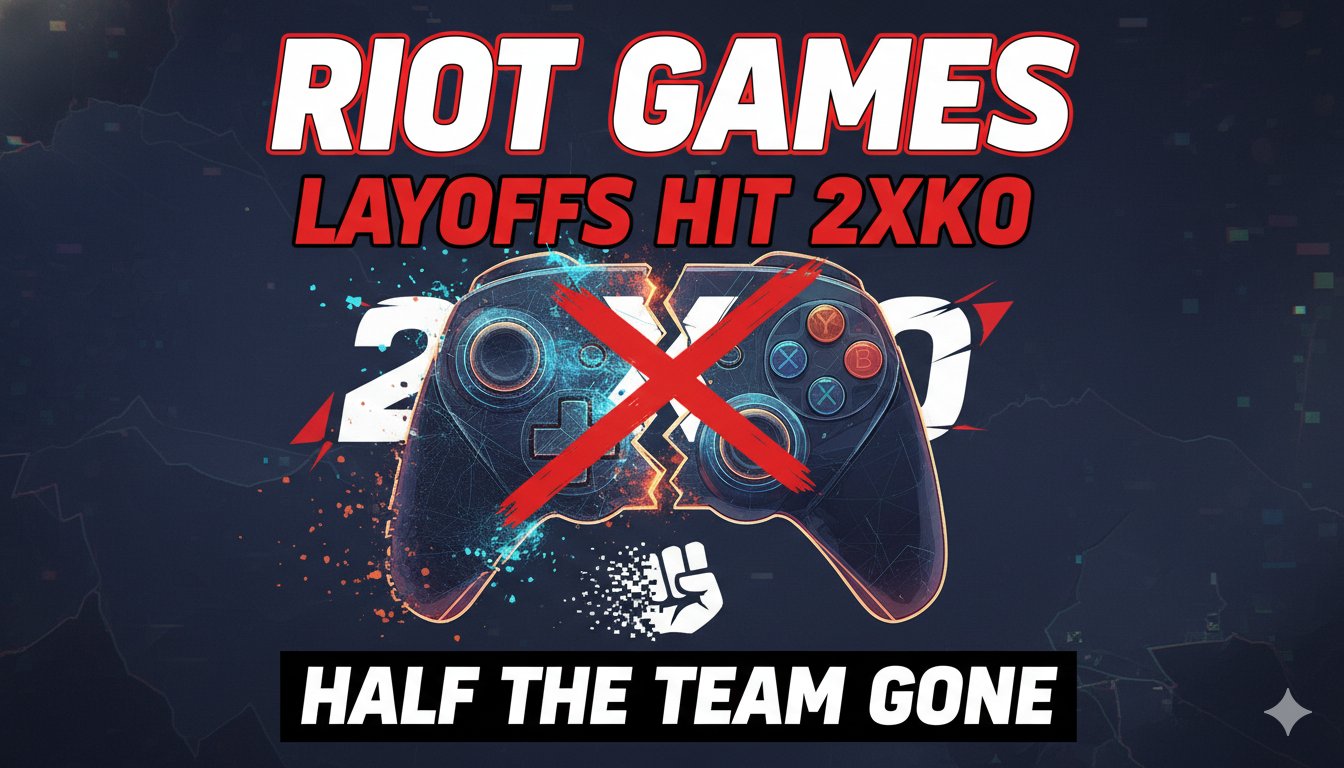
Riot Games has confirmed the reduction of roughly half its 2XKO development team, impacting around 80 roles globally, less than a month after the free-to-play 2v2 fighting game’s console release. The move aims to create a more sustainable structure for the League of Legends spin-off, which has built a dedicated core audience but fallen short of broader momentum expectations. Executive producer Tom Cannon emphasized that 2026 competitive plans remain unchanged, with support provided to affected staff including internal placement opportunities, six months of notice pay, and severance where applicable.
Riot Games Scales Back 2XKO Team Amid Performance Review
Riot Games has initiated a significant downsizing of the development team behind 2XKO , its tag-team fighting game set in the League of Legends universe. The decision, announced in an official company update, affects approximately 80 positions worldwide — representing roughly half of the project’s global staff.
The layoffs come shortly after 2XKO expanded to consoles in late January, following its earlier PC open beta and full launch phases. While the game has cultivated a committed player base drawn to its innovative 2v2 mechanics, unique tag system, and familiar League champions adapted into a fighting game format, engagement metrics across platforms have not scaled to the levels required to justify maintaining the full team size over the long term.
Executive producer Tom Cannon addressed the community directly, explaining that the company observed consistent player engagement patterns during the transition from PC to consoles. He noted that while a passionate core group has embraced the title, overall growth and momentum have not aligned with the resources previously allocated to the project. The restructuring is framed as a deliberate step to refocus efforts and secure a viable future for 2XKO rather than an abandonment of the project.
Key aspects of the announcement include:
No changes to the planned 2026 competitive season, including ongoing tournaments, ranked play, and seasonal updates.
A renewed emphasis on core gameplay improvements, balance adjustments, new character releases, and quality-of-life features to strengthen retention among existing players.
Commitment to supporting impacted employees through transition assistance, priority consideration for open roles across Riot’s broader portfolio, and generous severance packages (minimum six months of notice pay plus additional benefits in cases where internal relocation is not possible).
2XKO entered the market as Riot’s first major push into the traditional fighting game space, building on years of development initially known under the codename Project L. The title differentiates itself with duo-based combat where players control two characters simultaneously in tag-team battles, combining fast-paced action with strategic depth through assists, switches, and combo extensions. Its free-to-play model relies on cosmetic monetization, including character skins, emotes, and other visual customizations drawn from the League aesthetic.
The timing of the staff reduction has drawn attention across the industry, as such moves so soon after a major platform expansion are uncommon. However, Riot’s statement underscores that this is not a reflection on individual contributions or the quality of work delivered. Many team members have spent years — in some cases over a decade — contributing to the project’s evolution from prototype to released product. The company highlighted the meaningful progress made and the creative risks taken in bringing a new genre entry to its ecosystem.
Looking ahead, the slimmed-down team will concentrate on delivering sustained content and refinements designed to deepen engagement within the existing community. This includes maintaining the competitive calendar and responding to player feedback on mechanics, matchmaking, netcode stability, and roster expansion. Riot has positioned the changes as essential for long-term viability in a competitive free-to-play landscape where player retention and monetization efficiency are critical drivers of success.
The fighting game genre remains challenging for new entrants, even those backed by established IPs. While 2XKO benefits from League’s massive global recognition and champion familiarity, breaking through in a space dominated by long-standing franchises requires exceptional execution across gameplay, community building, and live-service delivery.
Riot’s broader organization continues to prioritize its flagship titles like League of Legends and Valorant, which generate the majority of revenue and support ambitious crossovers like 2XKO . By resizing the dedicated team, the company appears to be balancing innovation with financial discipline in an era of heightened scrutiny on development costs and returns.
Disclaimer: This is an independent news report based on publicly available information. It is not investment, career, or legal advice. Market and employment conditions can change rapidly.