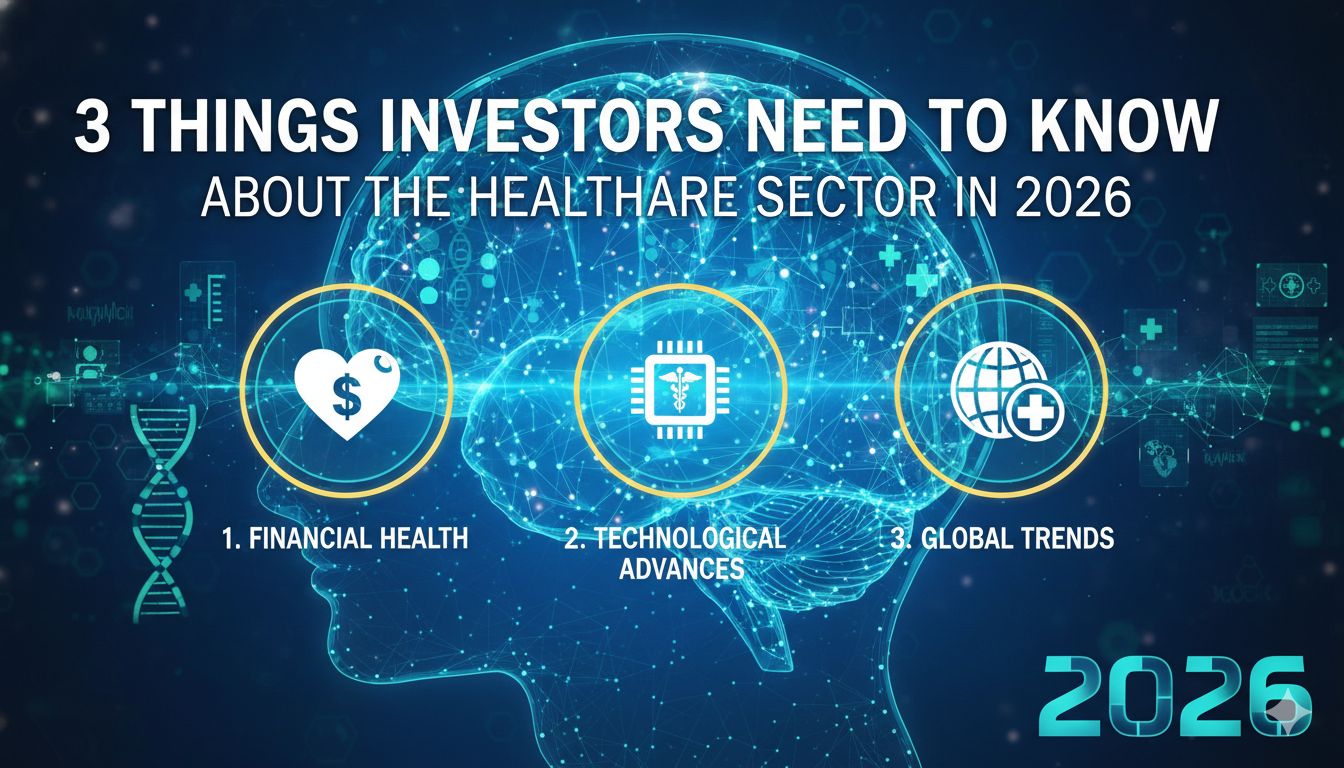
“The healthcare sector in 2026 is poised for transformation through rapid AI integration boosting efficiency and innovation, a surge in mergers and acquisitions driving consolidation and growth, and navigating regulatory shifts alongside economic pressures that create both challenges and undervalued opportunities for savvy investors.”
Accelerating Adoption of AI and Digital Transformation
The integration of artificial intelligence into healthcare operations is reshaping the industry at an unprecedented pace, offering investors a gateway to high-growth areas amid persistent margin pressures. Providers and payers are increasingly turning to AI-driven tools to automate administrative tasks, enhance diagnostic accuracy, and personalize patient care, which could unlock billions in cost savings while improving outcomes.
Consider the shift in drug discovery and development, where AI platforms are compressing timelines from years to months by analyzing vast datasets to predict molecular interactions and clinical trial success rates. Biotech firms leveraging these technologies are seeing clinical trial efficiency improvements of up to 30%, reducing failure rates and accelerating time-to-market for new therapies. This is particularly evident in oncology and rare diseases, where machine learning models identify biomarkers that traditional methods might overlook, potentially increasing the ROI on R&D investments.
In clinical settings, AI is revolutionizing workflow automation. Hospitals are deploying agentic AI systems that handle everything from scheduling to claims processing, cutting operational costs by as much as 15-20% in high-volume environments. For instance, predictive analytics are being used to forecast patient admissions, optimizing staffing and resource allocation to combat workforce shortages that have plagued the sector. Payers, meanwhile, are utilizing AI for fraud detection and utilization management, with algorithms flagging anomalous claims in real-time to prevent billions in annual losses.
Investors should focus on subsectors like health information technology and medtech, where scalable platforms integrating AI with electronic health records are gaining traction. These solutions not only streamline interoperability but also enable value-based care models, where reimbursements are tied to outcomes rather than volume. However, the key risk lies in data privacy and algorithmic bias, which could lead to regulatory scrutiny if not addressed proactively.
To illustrate the potential, here’s a breakdown of projected growth areas influenced by AI:
| Subsector | Key AI Applications | Projected 2026-2029 CAGR | Investment Drivers |
|---|---|---|---|
| Biotech & Pharma | Drug discovery, personalized medicine | 12-15% | Faster approvals, lower R&D costs |
| Provider Services | Diagnostic imaging, predictive analytics | 10-13% | Efficiency gains, reduced errors |
| Payer Operations | Claims automation, risk stratification | 8-11% | Cost control, compliance enhancement |
| Digital Health | Telemedicine, wearables integration | 14-18% | Consumer demand, remote monitoring |
This table highlights how AI is not just a buzzword but a tangible driver of returns, with medtech and digital health leading the charge due to their adaptability to lower-cost care settings.
Surge in Mergers and Acquisitions Activity
A wave of consolidation is sweeping through the healthcare landscape, with mergers and acquisitions expected to accelerate as companies seek scale, technological synergies, and market expansion to counter economic headwinds. Biotech and pharmaceutical firms are prime targets, with strategic buyers eyeing innovative pipelines in areas like gene therapy and immunotherapy to bolster their portfolios.
The rationale is clear: in a post-pandemic era marked by supply chain vulnerabilities and pricing pressures, larger entities can negotiate better terms with suppliers and payers, while diversifying revenue streams. For example, pharma giants are acquiring smaller biotechs with promising platforms in obesity treatments and neurodegenerative diseases, where blockbuster drugs could generate tens of billions in annual sales. This activity is fueled by a more favorable regulatory environment compared to previous years, allowing deals that enhance innovation without stifling competition.
In healthcare services, expect continued roll-ups in behavioral health, fertility, and specialty practices, where tech-enabled models are attracting private equity. Investors are favoring platforms with regional density and strong clinical integration, as these can leverage economies of scale to improve margins. The medtech space is also ripe for deals, particularly in devices that incorporate AI for remote monitoring, which align with the shift toward outpatient and home-based care.
Key points for investors include monitoring dry powder in private equity funds, which remains abundant and poised for deployment in sizable transactions. While valuation dislocations from prior cycles persist, lower interest rates are unlocking delayed exits, potentially leading to a backlog of high-quality assets hitting the market. However, reimbursement risks loom, especially in Medicare Advantage, where policy changes could impact profitability.
Here’s a snapshot of recent M&A trends extending into 2026:
| Deal Type | Examples | Value Range (2025 Deals) | Outlook for 2026 |
|---|---|---|---|
| Biotech Acquisitions | Platforms in AI-drug design | $5-15B | Increased volume, focus on innovation |
| Provider Consolidation | Behavioral health networks | $1-5B | Tech integration drives premiums |
| Pharma Mergers | Specialty drug pipelines | $10-50B | Scale for global expansion |
| Medtech Roll-Ups | Diagnostic tools | $2-8B | Emphasis on cost-efficient models |
This consolidation not only creates synergies but also positions acquirers to capitalize on demographic shifts, such as an aging population driving demand for chronic care management.
Navigating Regulatory Changes and Economic Pressures
The healthcare sector is grappling with a complex web of regulatory shifts and macroeconomic factors that could redefine profitability and access, presenting both hurdles and undervalued entry points for investors. Policy uncertainty, particularly around drug pricing and reimbursement, is a dominant theme, with potential cuts in federal programs like Medicaid exerting downward pressure on margins.
Payers face escalating premiums, projected to rise 6-9% for employers, prompting a reevaluation of benefit designs toward high-deductible plans and value-based arrangements. Providers, meanwhile, are contending with affordability challenges and capacity constraints, exacerbated by workforce shortages and rising operational costs. Yet, this environment is fostering innovation in lower-cost settings, such as ambulatory surgery centers and telehealth, where margins can exceed traditional hospital-based care by 20-30%.
From a valuation standpoint, the sector appears relatively attractive, with forward price-to-earnings ratios hovering around 18.7 compared to the broader market’s 22.2, suggesting room for appreciation as earnings growth materializes. Investors should watch for opportunities in resilient subsectors like healthspan technologies and specialty pharmacy, where growth is decoupled from broader economic slowdowns.
Economic pressures are also accelerating the migration to tech-enabled care, with automation addressing labor costs that remain stubbornly high. Cybersecurity threats add another layer, necessitating investments in robust digital infrastructure to safeguard patient data and maintain trust.
Critical sections to monitor include:
Policy Impacts : Anticipated CMS adjustments could boost or hinder Medicare Advantage enrollment, affecting payers’ revenue streams.
Cost Control Strategies : Organizations prioritizing AI for efficiency are better positioned to weather reimbursement reductions.
Growth Hotspots : Areas like preventive care and AI-assisted diagnostics offer defensive plays amid volatility.
Overall, while headwinds persist, the sector’s EBITDA growth is forecasted at 5% annually through 2027, rising to 10% thereafter, rewarding those who invest in adaptable, tech-forward companies.
Disclaimer: This article is for informational purposes only and does not constitute investment advice, financial recommendations, or an endorsement of any securities. Readers should conduct their own research and consult with qualified professionals before making any investment decisions. The information presented is based on publicly available data and may not reflect all risks or future developments.